In April, Nu Fest 2023 in Venice celebrates their memory and spirit with two events, on April 6th at the Fondaco dei Tedeschi and on April 29th at the Teatrino di Palazzo Grassi, with the projects Solaris (Giorgio Li Calzi-Manuel Zigante) and Impro Brain Sound Pod (Paolo Dellapiana-Valeria Sturba).
What is the Nu Fest 2023 in Venice?
Nu Fest is Veneto Jazz’s signature festival of electronic and contemporary music, founded in 2007 by Marcello Mormile, the festival’s artistic director.
His knowledge of experimental music and his innate intuitive sensitivity to the discovery of new musical trends in this field met the history and structure of Veneto Jazz, giving birth to unprecedented projects such as Nørdic Frames, a festival dedicated to Nordic production, and unforgettable events.
The events of Nu Fest 2023 in Venice
April 6th: Solaris at Fondaco dei Tedeschi
In Solaris, at the Fondaco dei Tedeschi on April 6, two different musical paths converge on an original common ground, inspired by Tarkovsky’s film of the same name.
The project, born in 1986 from the encounter between Zigante’s cello and the electroacoustic sounds of Li Calzi’s trumpet, traverses electroacoustic improvisation, electronics and contemporary rewriting of Bach and Artemyev’s classicism.
Tickets
Free admission by reservation only, by writing to fondaco.culture@dfs.com. Entrance 15 minutes before the start time of the event.
Manuel Zigante, a cello graduate of the Santa Cecilia Conservatory in Rome, is the founder of the Turin String Quartet under the direction of Piero Farulli (Quartetto Italiano) and the composer Gyorgy Kurtág, with whom he has performed extensively.
Giorgio Li Calzi, composer, trumpeter and music producer, is a cultural promoter and director of performance productions. He has produced jingles for many Italian brands like FIAT or Birra Moretti, he has composed music for theater and dance, played with musicians such as Wolfgang Flür (Kraftwerk), Lenine, Jon Balke, Marconi Union, and recorded during the 2020 lockdown with Arto Lindsay, Thomas Feiner, Frank Bretschneider, Stefan Németh, and the poet Chandra Livia Candiani.
April 29th: Impro Brain Sound Pod at Palazzo Grassi
Architect and electronic musician, Paolo Dellapiana is a transversal figure of the international experimental scene, former member of the Turin cult band Larsen since 1996.
As part of Nu Fest, he signs this new project with the multi-instrumentalist and singer Valeria Sturba, who crosses electroacoustic instruments with complex modular systems elaborated ad hoc, in a continuous search for avant-garde sound layering.
Both with Larsen and on his own, Paolo Dellapiana has presented his music with extensive tours and concerts throughout Europe and the United States. He has shared the stage with legends such as Einsturzende Neubauten, Swans, Neurosis, Breach, Crash Worship, Ulan Bator, Michael Gira, My Cat Is An Alien, Allun, Ronin, The Living Jarboe, Backworld, Xiu Xiu, Thalia Zedek, Dresden Dolls, Amber Asylum, Current 93, Johann Johann Johannsson, Baby Dee, Fovea Hex, Piano Magic, The Dead Texan.
Valeria Sturba is a multi-instrumentalist, singer and composer. A violinist by training, she plays theremin, keyboards, synthesizers, electronic effects, loopers and sound toys, crossing electroacoustic instruments with complex ad hoc modular systems in a constant search for avant-garde sound layering.
She has participated in many national and international festivals such as Umbria Jazz, Electromagnetica (Chile), B-Classic (Belgium), Dong! (Denmark), Tectonics (Scotland), Dancity, RoBOt. He has collaborated with many artists such as Tristan Honsinger, Ernst Reijseger, Enrico Gabrielli and Calibro35, Stefano Bollani, John De Leo, Cristina Donà, Stefano Benni, Hamid Drake, Lino Guanciale, Anna Maria Hefele, Giancarlo Schiaffini.
Ah, the Festa della Sensa in Venice! It’s one of the most anticipated events of the year. It celebrates the union between the Serenissima Republic of Venice and the sea.
If you’re in love with Venice, you simply cannot miss the Festa della Sensa! It is an event that perfectly embodies the city’s fascinating history and culture. The festivities are so unique and enchanting that it’s hard not to fall in love with the city all over again.
Imagine standing on the shores of the Venetian lagoon and watching a procession of beautifully decorated boats glide past you, accompanied by the sound of gondoliers singing traditional songs. It’s a sight that will take your breath away!
And that’s not all – the Festa della Sensa is also the perfect opportunity to immerse yourself in Venetian history. You’ll witness the traditional ceremony of the Venetian Marriage to the Sea, when the Doge throws a ring into the water to symbolise the marriage between Venice and the sea. It’s a moment that truly highlights the city’s maritime traditions and the importance of the sea in Venetian culture.
The Festa della Sensa in Venice nowadays
The festival consists of two parts: a religious ceremony and a water procession.
The religious ceremony takes place in St Mark’s Basilica, where the Mayor of venice offers a golden ring to the sea as a symbol of Venice’s sovereignty over the Adriatic Sea. The ring is blessed by the catholic Patriarch. He then throws it into the water as a sign of the Venetian marriage to the sea.
The water procession, the highlight of the festival, is a parade of traditional boats, including gondolas, sandoli and pupparini, that sail from St Mark’s Basin to the island of San Nicolò di Lido. The procession is led by the Bucintoro, the Doge’s ceremonial boat, used in the past also for the Doge’s coronation.
But that’s not all. After the water parade, you can enjoy a day-long fair on the Lido. This festival is famous for its delicious seafood dishes, including the traditional “sarde in saor“, marinated sardines with onions, raisins and pine nuts. There are also many other local local dishes to try, along with plenty of wine and prosecco from the Veneto wine region.
As already mentioned, the tourist flow in Venice in April is not so big and it is very difficult to find fully booked hotels. I would still advise you to book well in advance, especially if you are planning to spend Easter or April 25th in Venice, as these days attract many tourists every year.
To make it easier for you, we have selected some of the best Venetian hotels that offer great value for money and are ideally located for exploring Venice in April:
Elegance and refinement are just two of the elements that distinguish this Bed & Breakfast: You will be satisfied because B&B Bloom is a warm and cosy place to stay. Modernity blends with classic Venetian style to create a charming décor. And don’t forget to take advantage of the terrace with a panoramic view of the Serenissima, which is B&B Bloom’s unique selling point!
Antica Locanda Sturion ***
Located on the top floor of an ancient Venetian palace, this is one of the few 3-star hotels in Venice. The interior is very charming, with typical Venetian red furniture and damask, evoking the bygone days of rich spice merchants and ambassadors from all over the world.
The Festa della Sensa, which means “Feast of the Ascension”, is an ancient Venetian festival that celebrates the maritime power of Venice and the city’s bond with the sea. The festival is held on the Sunday after the Ascension, forty days after Easter, and has been celebrated for over a thousand years.
The Festa della Sensa has its roots in the legend that, in the year 1000, the Doge of Venice, Pietro II Orseolo, sailed to Dalmatia to help the people of Zara in their fight against the Slavs. When the Venetian fleet reached the waters off Zara, a violent storm threatened to sink the ships and the Doge prayed to the heavens for deliverance. All of a sudden, a mysterious figure appeared, calmed the storm and led the fleet to victory.
The mysterious figure was identified as the personification of the Sensa, a symbolic representation of the marriage between Venice and the sea. From that day on, the Festa della Sensa became an annual event to celebrate the power and glory of Venice and to renew the vow of its maritime supremacy.
Established in the 14th century, the Festa della Sensa in Venice arose from the fact that in late spring the lagoon city was crowded with pilgrims heading to the Holy Land who usually stayed in the city until the feast of Corpus Christi, and with numerous faithful who went to St Mark’s basilica to obtain the indulgence granted by Pope Alexander III.
The Festa della Sensa in Venice was set up in St. Mark’s Square eight days before Ascension Day and continued for the following fifteen days and was regularly visited by the doge and his foreign guests.
The vendors were arranged in an elliptical wooden structure that occupied the entire St. mark’s square. While the outer ring sold the most common goods, the inner ring displayed objects of great economic value and artistic value. The Festa della Sensa continued into the evening hours and attracted a large number of tourists and traders.
The ancient celebration of the Festa della Sensa in Venice
The Festa della Sensa on Ascension Day
On the eve of Ascension Day, the Bucintoro left the Arsenale shipyard and was taken to the city, where it was displayed on the Riva degli Schiavoni, decorated for the occasion.
In addition to the Bucintoro, all the other boats, including military and merchant vessels, that were to take part in the parade were prepared and taken to the arm of the sea that separates Venice from the Lido.
The buildings were decorated and in the evening all the church bells in Venice rang out simultaneously to announce the beginning of the religious ceremony celebrated in St Mark’s Basilica.
The second day of the Festa della Sensa in Venice
The next morning, the bells announced the departure of the Doge and his court from the Doge’s Palace.
He was followed by a court composed of the Serenissima Signoria, the Cancelliere Grande, the major magistrates, the Apostolic Nuncio and foreign ambassadors.
The Doge and his court then went ashore to board the Bucintoro, which, after a cannon shot in front of St. Mark’s Square – and a concert of cannon blasts from the naval ships-, sailed into the basin of St Mark’s towards the Lido.
Along with the Bucintoro, the waters of the basin were sailed by the Peatoni, three golden boats that always followed the Bucintoro on its voyages.
There were also the golden gondolas of the Papal Nuncio, of the other ambassadors and of the Patriarch of Venice.
In addition to the representative ships, there were six large galleys, decorated with silk cloth and flags, on which a band played and a small army of Dalmatian soldiers dressed for parades.
There were twelve other ships, including brigantines, galleys, sciabecques and feluccas, also richly decorated and equipped with bands and Dalmatian soldiers.
There were also the peote representing the different communities of the Dogado, each with its own identifying banner, and numerous gondolas and private boats of various types that followed the procession.
When it reached the Lido, the Bucintoro stopped and while the cannons of the galleys continued to fire blank shots, the rite of the marriage between Venice and the sea took place. From the Bucintoro, the Doge, flanked by the Patriarch of Venice, poured into the sea an ampoule of holy water and a ring blessed by the Patriarch, pronouncing the words:
“Desponsamus te, mare nostrum, in signum ven perpetuique dominii”.
“We marry you, our sea, as a sign of our everlasting dominion”.
After the Marriage between Venice and the Sea, the Doge disembarked at the Lido of Venice and proceeded to the Church of San Nicolò, where, welcomed by the crowd and the Benedictine monks, he attended the Pontifical Mass.
While the Doge and his court attended mass, the gondoliers enjoyed speed races on the Giudecca Canal and grand lunches were held in the gardens of the surrounding islands. Like the carnival during the Sensa festival, masks and lavish costumes were allowed.
What is the Bucintoro and why was it used for the Venetian marriage to the sea?
The Bucintoro is a ceremonial boat used by the Doge of Venice for the annual Venetian Marriage to the Sea ceremony, also known as the Sensa ceremony. It was a symbol of the wealth and power of the Venetian Republic and played an important role in the city’s maritime history.
The first Bucintoro was built in the 14th century, and over time it was rebuilt and expanded with luxurious decorations and furnishings. The ceremony took place on Ascension Day, when the Doge and other dignitaries would board the Bucintoro and sail out to the Adriatic Sea to perform the ritual of “marrying” the sea by throwing a gold ring into the water.
The original Bucintoro was destroyed in 1798 by Napoleon’s troops, and today only fragments of it remain, including a few ornate decorations housed in museums. However, the tradition of the Venetian Marriage to the Sea ceremony continues to be celebrated in Venice every year, albeit without the original Bucintoro.
Summary
The Festa della Sensa in Venice is a unique celebration that combines history, tradition and cuisine in a magical atmosphere that only Venice can offer. It’s a great way to experience the city’s maritime roots and celebrate its enduring bond with the sea.
The Festa della Sensa in Venice is not only a historical event, it’s also an opportunity to enjoy the company of locals and tourists alike while tasting delicious Venetian food and wine. You can even take part in a rowing competition or simply enjoy a leisurely gondola ride along the canals.
In short, the Festa della Sensa is a must for anyone who loves Venice. It’s a unique experience that allows you to immerse yourself in the city’s rich history and culture, while enjoying the beauty and charm of Venice in all its glory. So come and celebrate this wonderful event with us and fall in love with Venice all over again!
So if you happen to be in town during this time, be sure to join in the festivities and experience the joy and excitement of the Festa della Sensa in Venice.
Oh no, it’s raining in Venice! Quick, let’s find some shelter and avoid getting soaked. If you’re like me and despise the rain, don’t worry! I’ve got you covered with some tips on what to do in Venice when it’s pouring cats and dogs.
Despite the city being flooded by rain, there are still plenty of cool places to visit and things to do in Venice that will make your rainy day an awesome experience. From cozy taverns to unique destinations, you won’t even notice the rain with these activities.
Don’t let the rain put a damper on your trip to Venice. Instead, embrace the weather and enjoy some of the best indoor activities that the city has to offer. Trust me, you won’t regret it!
If you want to get hints and tips for having fun in Venice when it rains, read this article now and put it into practice!
Museums and Exhibitions in Venice on a Rainy Day
Biennale di Venezia 2019: May you live in interesting times.
Venice boasts numerous world-class museums and galleries including the Gallerie dell’Accademia, Palazzo Grassi, and Peggy Guggenheim Collection. Take some time to explore their impressive collections and appreciate the art.
Visit the fabulous Peggy Guggenheim Collection
If you’re looking for a recommendation, consider visiting the Peggy Guggenheim Collection. The museum showcases Peggy Guggenheim’s personal collection, which features masterpieces of Cubism, Futurism, Metaphysical Painting, European Abstractionism, avant-garde sculpture, Surrealism, and American Abstract Expressionism.
The Venice Biennale, also known as La Biennale di Venezia, is a set of many exhibitions that takes place every years in Venice, Italy. The main events (Art Biennale and Architecture Biennale) usually run from May through November on alternate years.
The Biennale di Venezia is one of the oldest and most prestigious art exhibitions in the world.It celebrates contemporary art, architecture, cinema, dance, music and theatre and brings together artists and creatives from around the world.
On a rainy day in Venice, visitors can take their time exploring the exhibits without feeling rushed or crowded. The rain can also add to the overall experience, as the art takes on a different character in the wet and moody weather. Additionally, the Biennale venues are often covered, providing a perfect shelter from the rain.
If you happen to have lots of hours and the rain is incessant, you can enjoy them all.
Finding Refuge at the Best Cafes for a Rainy Day in Venice
Looking for a cozy place to warm up and enjoy a cup of coffee while it’s pouring down outside in Venice? Well, look no further! I’ve got you covered. Here are three of the best coffee shops in the city to visit on a rainy day.
Torrefazione Cannaregio
The Torrefazione Cannaregio is a small coffee roaster located in the heart of the Cannaregio district. This place has a warm and inviting atmosphere, perfect for a rainy day. You can watch the beans being roasted while sipping a delicious espresso, cappuccino or latte. And if you’re a coffee lover, be sure to buy some beans to take home!
Next up is the famous Caffé Florian, which dates back to 1720 and is one of the oldest coffee shops in Italy. Located in Piazza San Marco, it’s known for its beautiful historic interior with ornate furnishings and live classical music. Enjoy a cup of their specialty, the Florian Coffee, a blend of hot chocolate, coffee and cream. It’s the perfect treat to warm you up on a rainy day.
Last but not least, there’s Caffè del Doge, a boutique coffee shop located in the charming Dorsoduro neighborhood. They use only the highest quality beans, roasted in-house, to create a delicious cup of coffee. The decor is cozy and inviting, with exposed brick walls and warm lighting. The staff is also incredibly friendly and can recommend the perfect coffee based on your preferences.
A Delicious Food Tour of Bacaris in Venice when it rains
As I love Gorgonzola, I normally order all different cicchetti having it as toppping!
On a rainy day in Venice, there’s nothing better than a food tour of the city’s best bacaris to enjoy the cozy atmosphere of a city that is now truly surrounded by water on all sides.
Bacari are traditional Venetian small bars and taverns that serve small snacks called cicchetti and local wine. They are cozy and lively places where locals and tourists alike gather to socialize and enjoy a good time, commonly standing at the bar or outside on the street while sipping a glass of wine and sampling the delicious cicchetti.
The variety of cicchetti – the Venetian equivalent of tapas – offered varies depending on the bacaro, but you can find everything from seafood to meat, and vegetarian options as well. Bacari are a great place to experience the local culture and cuisine of Venice.
Cantina Do Spade
One of the best places to start your food tour is at Cantina Do Spade, one of the oldest bacaris in Venice. Here, you can try the classic Venetian dish of sarde in soar, or sweet and sour sardines. Pair it with a glass of local white wine such as Soave or Pinot Grigio.
Next, head to the bustling Rialto market and stop at Bancogiro, which is known for its selection of fresh seafood, coming directly for the Rialto market nearby. Try the seppie al nero, a dish of squid cooked in its own ink, and pair it with a glass of red Bardolino or Valpolicella.
If you want to taste ones of the best cicchetti of Venice, make your way to Cantine del Vino già Schiavi, a tiny bacaro located near one of the city’s iconic gondola repair shops. Here, you can try the famous Venetian cicchetti of baccalà mantecato, a creamy spread made from salt cod. They also have one of the most impressive wine offering of the city, which you can taste and appreciate in Venice when it rains.
Rainy Day Water Adventures: Exploring Venice by Vaporetto
The public transport in Venice: the water buses (“vaporetti”) at the Rialto Bridge.
When it rains in Venice, one of the best ways to explore the city is from the water, and taking the vaporetto is an excellent option. The vaporetto is the city’s waterbus system and it is used by locals and visitors alike to get around Venice and its many smaller islands.
While on the vaporetto, make sure to keep an eye out for landmarks such as the Doge’s Palace, the Campanile di San Marco, and the island of San Giorgio Maggiore. You can also see the colorful facades of the buildings lining the canals, which create a picturesque backdrop for your journey.
The different vaporetto lines
There are different tours you can take on the vaporetto, and all of them offer stunning views of Venice from the water. No matter which tour you choose, the vaporetto offers unique perspectives of the city that cannot be seen from land.
In Venice when it rains, the misty atmosphere adds an extra layer of charm to the experience. Taking the vaporetto in Venice on a rainy day is not only a practical way to get around the city, but also a unique and memorable experience. So, don’t forget to bring your camera and capture the beauty of Venice on a rainy day from the water.
Line 1
Vaporetto line 1 in Venice is not just any ordinary public transportation route. It’s a tourist attraction in its own right! This charming waterbus route takes you on a delightful tour along the Grand Canal, allowing you to enjoy breathtaking views of the most iconic sights of Venice.
From the Rialto Bridge to the stunning Ca’ d’Oro palace, you’ll be mesmerized by the beauty of the city as you glide along the water. The Vaporetto line 1 is a great way to see the city from a unique perspective, and get a sense of the charm and elegance that has made Venice one of the most beloved cities in the world.
Line 2
Vaporetto line 2 is a great alternative to explore Venice when it rains. It’s a more scenic route that takes you along the Grand Canal and offers some amazing views of the city’s most iconic landmarks. You can see the Rialto Bridge, St. Mark’s Basilica, and the Doge’s Palace from a different perspective while staying dry under the covered boat.
The line 2 vaporetto also stops at several famous museums, such as the Peggy Guggenheim Collection and the Ca’ Rezzonico Museum of 18th-Century Art. Enjoy a cozy ride and admire the beauty of Venice in the rain with line 2.
Line 3
If you’re looking for a different way to explore Venice on a rainy day, consider taking the vaporetto line 3. This touristic tour alternative takes you through the less crowded and more local areas of Venice, including the Cannaregio and Giudecca canals. You’ll still see some iconic landmarks such as the Rialto Bridge and St. Mark’s Square, but you’ll also get a glimpse into the authentic Venetian life. Don’t forget to bring your umbrella and camera to capture the unique views.
Line 4.1
The Basilica di Santi Maria e Donato is a beautiful church located on the island of Murano in Venice, known for its stunning Byzantine architecture and intricate mosaics.
Vaporetto Line 4.1 is a lesser-known option for a touristic tour in Venice when it rains. It’s a great way to explore the lesser-known parts of Venice and avoid the crowds. It runs from Fondamente Nove to Lido, passing through Murano, Vignole, and Sant’Erasmo.
On this route, you’ll see the beautiful Venetian lagoon and its islands. While it may not offer the same iconic views as other vaporetto lines, it’s a peaceful and relaxing way to experience the city. Don’t forget to bring your camera to capture the beautiful scenery.
The different Vaporetto tickets
The Vaporetto is a water bus service that is an essential mode of transport in Venice. There are different types of tickets available for Vaporetto rides, each with their own advantages and disadvantages.
There is the single ticket, which is valid for 75 minutes from the time of validation. This ticket allows you to travel on any Vaporetto line in Venice, making it a great option if you only plan to make one or two trips.
The 24-hour ticket is another option, which is valid for 24 hours from the time of validation. This ticket allows for unlimited travel on any Vaporetto line within the Venice area, making it a good choice if you plan to use the Vaporetto more than twice in a day.
For those who plan to stay in Venice for longer, the 48-hour and 72-hour tickets are available. These tickets are valid for 48 and 72 hours respectively, and also allow for unlimited travel on any Vaporetto line within the Venice area. These tickets offer good value for money if you plan to use the Vaporetto frequently during your stay.
There is also the Venezia Unica card, which includes unlimited use of the Vaporetto, as well as discounts on some of Venice’s museums and attractions. This card is available for 1, 2, 3, and 7 days and can be a great option if you plan to see many of the city’s sights.
It’s worth noting that tickets must be validated before boarding the Vaporetto, and failure to do so can result in a fine. Overall, the different types of Vaporetto tickets offer flexibility and convenience for exploring Venice in a unique way.
Fresh Catches and Rainy Day Adventures: Navigating the Rialto Market in Venice
The Rialto Market is a vibrant and bustling marketplace in Venice where locals and tourists alike can find fresh produce, seafood, and other specialty items.
If you’re looking for a unique and authentic Venetian experience on a rainy day, the Rialto Market is a must-visit destination. This bustling marketplace has been around since the 11th century and is located in the heart of Venice. The market is divided into different sections, with the most popular one being the fish and seafood section.
Walking through the market, you’ll be greeted by the sight of vendors displaying their catch of the day. From small shrimp to large lobsters, the selection of fresh seafood is impressive. It’s a treat for the senses to see the vibrant colors of the fish and smell the salty air.
Not only is the Rialto Market a great place to buy fresh seafood to cook at home, but it’s also a fantastic spot to try some of the local Venetian specialties. The market has several small bars called bacari, where you can stop for a snack and a glass of wine. Be sure to try the famous cicchetti, which are small bites of food that are perfect for sharing. You can try different types of seafood or even some meat and cheese specialties.
The Rialto Market is a great destination to visit in Venice on a rainy day because it’s mostly covered, and you can stay dry while exploring. The market is open every day except Sunday, and it’s best to arrive early in the morning to experience the hustle and bustle of the vendors setting up their stalls.
Even if you’re not a foodie, the Rialto Market is a fascinating place to visit. It’s a chance to experience the local culture and see how Venetians shop for their groceries. With the covered market, it’s a perfect destination to visit in Venice when it rains.
Historical monuments to discover on a rainy day in Venice
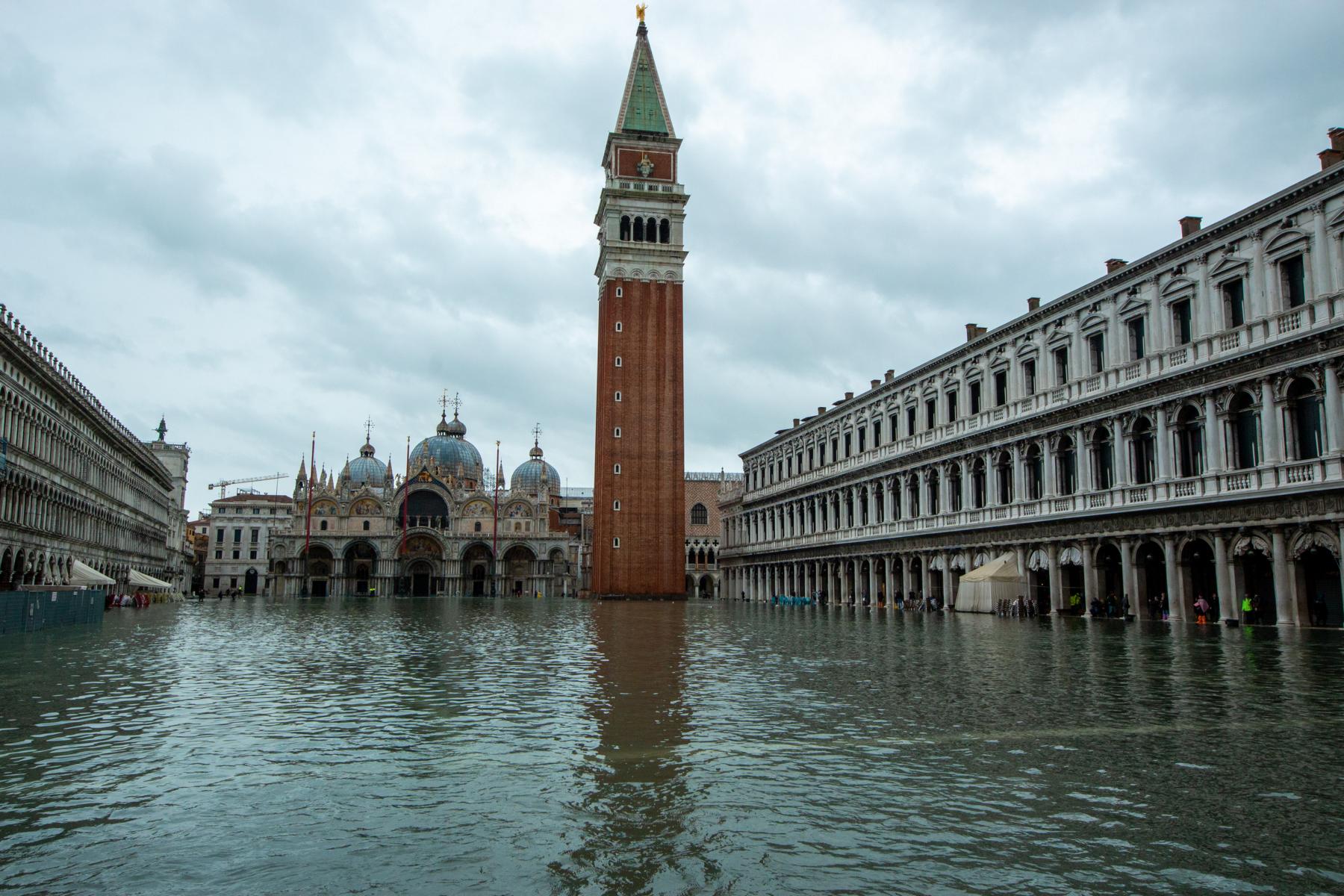
Another good way to enjoy Venice without the hassle of rain could be to visit historical monuments. My recommendation is Piazza San Marco, because this area of Venice is home to the city’s main attractions, so you can avoid long walks during a rainstorm.
The famous St. Mark’s Basilica, a symbol of Venice and one of the most beautiful churches in the world, is definitely worth visiting at least once in your life.
A word of advice: considering the rain and to avoid the queues that usually form at the entrance, it would be better to book the visit online.
Next to the Basilica is the Doge’s Palace, the famous residence of the Venetian Doges. if you have already bought the ticket for the Civic Museums, I remind you that the ticket price includes the entrance to the Palace.
St. Mark’s Basilica tour with “skip the line” admission
Retrace the history of Venice and discover the other incredible buildings around St. Mark’s Square by taking advantage of the “skip the line” entrance to St. Mark’s Basilica.
The Doge’s Palace is the imposing building that stands in St. Mark’s Square and overlooks the Venice lagoon. Skip the line and discover the beauty of its interior.
Symbols of Venice are the majestic Doge’s Palace and the magnificent St. Mark’s Basilica. Skip the line and visit both monuments while also accessing areas usually closed to the public.
Libreria Acqua Alta is a famous bookstore located in the Castello district of Venice. It is known for its unique and charming atmosphere, and famous for its quirky and creative displays, and is a popular destination for both locals and tourists.
If you are a book lover and it looks like the rain will not be stopping anytime soon, Venice has got you covered. The city boasts numerous libraries and bookstores where you can while away a few hours waiting for the rain to clear up. Two bookstores, in particular, stand out because of their unique beauty and history.
Libreria Marciana
If you’re looking for a quiet and cozy place to visit in Venice on a rainy day, the Marciana Library should definitely be on your list. Located in the heart of St. Mark’s Square, the library is a true gem of Venetian culture and history.
The library was founded in the 16th century, during the height of Venice’s power and wealth, and was named after St. Mark, the city’s patron saint. Over the centuries, the library has grown to become one of the most important in Italy, if not the world. Its collection includes more than a million volumes, including rare manuscripts, prints, maps, and other documents that offer a glimpse into the city’s fascinating past.
But it’s not just the library’s contents that make it worth a visit on a rainy day. The building itself is a masterpiece of architecture and design. The library’s grand entrance is marked by two imposing bronze statues of Mars and Neptune, which symbolize the power of Venice as a maritime republic. Inside, visitors can admire the magnificent frescoes and sculptures that adorn the walls and ceilings of the library’s many rooms and galleries.
Libreria Acqua Alta
Just 10 minutes away, in Sestiere Castello, lies the famous Libreria Acqua Alta, often regarded as one of the top ten bookstores in the world. This place is a true gem and offers an experience like no other. A place out of time that fascinates and immerses every visitor in an “other” universe where it is possible to get lost.
The Acqua Alta bookshop is known for its eclectic and diverse collection of books, which includes everything from classic literature to contemporary bestsellers, as well as books in several different languages. Here, you can find all sorts of books and magazines piled up in gondolas, read poetry alongside friendly cats, or even climb a staircase made entirely of books, all while overlooking a canal.
The mascot of the Libreria Acqua Alta library in Venice.
The name “Acqua Alta” means “high water” in Italian, and refers to the frequent flooding that occurs in Venice during the winter months. The bookstore is located in a low-lying area of the city that is particularly prone to flooding, and as a result, the owners have come up with some creative ways to protect their books from the water.
The bookstore is also home to several resident cats, who are free to roam around the store and often curl up on the shelves or in the display cases. The cats have become a beloved part of the bookstore’s charm and character.
You only have to walk into this small bookstore to realize that you are looking at something absolutely extraordinary: stacks of books on the most diverse subjects, perfectly arranged on volume-saving gondolas during floods. A dream come true.
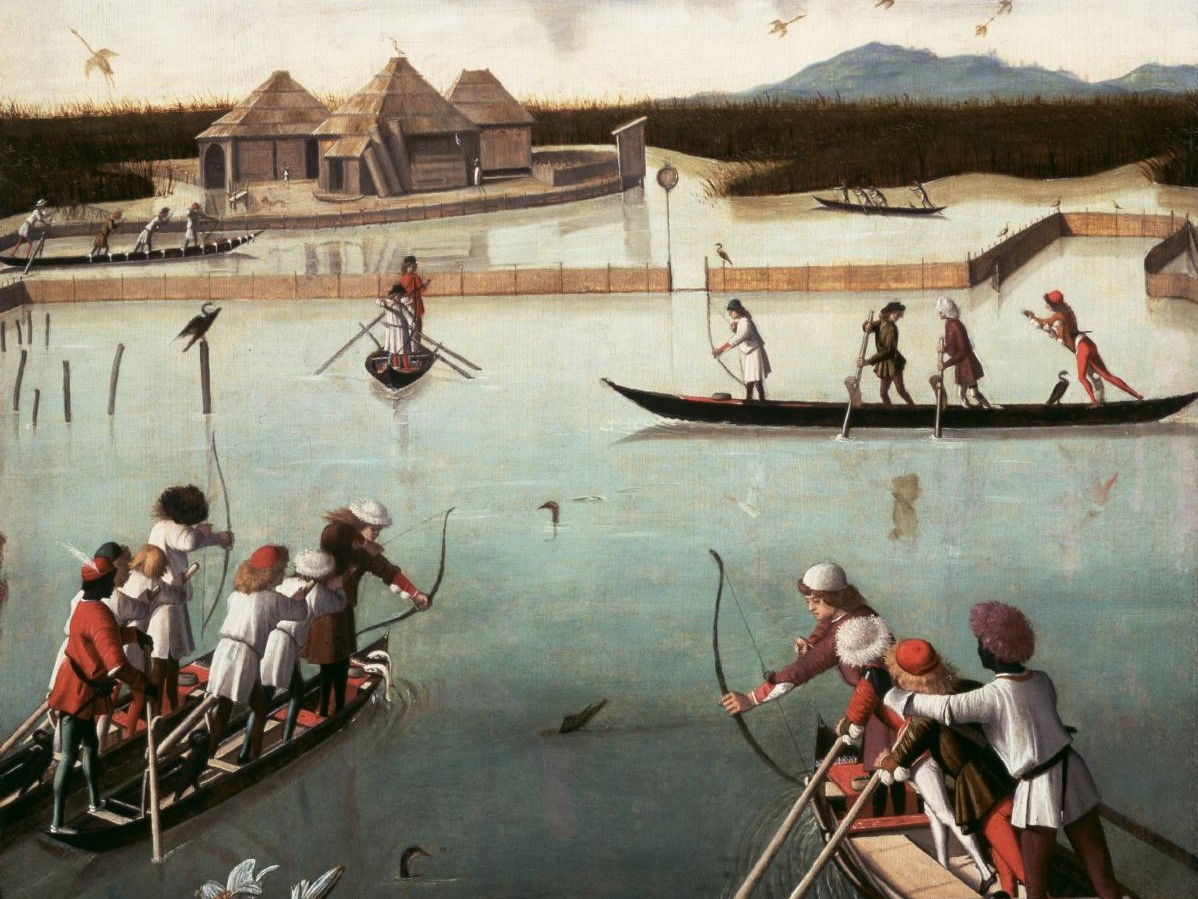
The retrospective Vittore Carpaccio in Venice opens on 18 March and will be on show until 18 June. The exhibition is curated by Peter Humfrey, a specialist on the painter and his environment, in collaboration with Andrea Bellieni, member of the board of directors of the Musei Civici di Venezia and director of the Correr Museum, and Gretchen Hirschauer, curator of Italian and Spanish painting at the National Gallery of Art in Washington.
With this magnificent exhibition, based on discoveries and new attributions, as well as extraordinarily revealing restorations, we can offer the public and scholars an updated historical-critical reinterpretation of Carpaccio’s painting and its evolution, from the beginnings to the late works, which are usually neglected by critics.
Andrea Bellieni, Director of the Correr Museum
Many of the works on display are on loan from museums, churches, institutes and private collections in Europe and the United States. These works are essential to offer a tour that documents the evolution of Carpaccio’s art in the most objective and complete way.
His works, perhaps more than those of any other Venetian Renaissance artist, embody the essence of “Venetian”, that is, the opulent spectacle and mythology of the Serenissima, which was then at its economic and cultural zenith. With this exhibition, Venice also celebrates its history, its tradition and one of its most famous painters, who through his art tells us about the city and its beauty, giving us images of everyday life from a past that comes alive again.
Luigi Brugnaro, Mayor of Venice
45 paintings with religious, profane or genre themes illustrate the artist’s great imagination, narrative and descriptive skills, as well as his skilful painting technique. A striking core of drawings, on the other hand, demonstrates his particular ability to ‘study’ reality in detail, revealing his interest in nature, perspective, the customs of his time and the effects of light.
Prices and opening hours of the exhibition Vittore Carpaccio in Venice
Until March 17, 2023, one day before the opening of the exhibition, tickets cost only 10 euros instead of 13.
The exhibition can be visited from March 18, 2023 to June 18, 2023. In March from 9 am to 6 pm, from April from 9 am to 7 pm. Last admission always until one hour before closing.
Welcome to the exciting world of the Venice Biennale, one of the oldest and most prestigious art exhibitions in the world. Held every two years in the beautiful lagoon city of Venice, the Biennale is a celebration of contemporary art, architecture, cinema, dance, music and theatre that brings together artists and creatives from around the world.
Held every two years in Venice, the Biennale consists of two main events: the International Art Exhibition and the International Architecture Exhibition. These two events differ in focus and scope and are organised by different bodies within the Biennale organisation.
In this blog post, I’ll take you on a journey through the history and significance of the Venice Biennale and give you some insider tips on what not to miss during your visit. So buckle up and let’s explore the fascinating world of the Biennale di Venezia!
The best accommodation for your visit to the Venice Biennale
There are many great hotels in Venice that are suitable for a visit to the Biennale, depending on your preferences and budget.
Here are some options:
Belmond Hotel Cipriani*: This luxury hotel is located on Giudecca Island, just a short boat ride from the Biennale venues. It offers stunning views of the lagoon and a quiet retreat from the crowds of Venice.
Hotel Danieli*: This historic hotel is located in the heart of Venice, a short walk from the Biennale venues in the Giardini. It offers elegant rooms and suites and a rooftop terrace with panoramic views.
JW Marriott Venice Resort & Spa*:This luxury hotel is set on its own private island, just a short boat ride from the Biennale venues. It offers a tranquil retreat and breathtaking views of the lagoon.
Hilton Molino Stucky Venedig*: This modern hotel is located on Giudecca Island, a short boat ride from the Biennale venues. It offers spacious rooms and suites and a rooftop terrace with panoramic views.
Hotel Excelsior Venedig*: This luxury hotel is located on Lido Island, a short boat ride from the Biennale venues. It offers elegant rooms and suites and a private beach.
If you are looking for the cheapest hotels in Venice, here is my personal selection
These are just some of the options, and there are many other great hotels in Venice suitable for a visit to the Biennale. It is important to book your accommodation well in advance, as the city can get very crowded during the Biennale.
Biennale di Venezia 2019: May you live in interesting times.
The Venice Biennale today
The Venice Biennale has a long and eventful history and has become one of the most important cultural events in the world. Today, the Venice Biennale is still considered one of the most important cultural events in the world. It attracts thousands of visitors from all over the world, including art collectors, curators, critics and enthusiasts.
Facts and figures about the Venice Biennale
The Venice Biennale is held every two years, usually from May to November. It takes place in various locations around the city, including the Giardini, a public park that houses the main exhibition pavilions, and the Arsenale, a former shipyard that has been converted into a huge exhibition space.
One of the most exciting aspects of the Venice Biennale are the National Pavilions. These are solo exhibitions organised by each participating country and set up in pavilions in the Giardini Park. Each pavilion is curated by a team of experts from that country and offers a unique perspective on that country’s art and culture.
In addition to the national pavilions, the Biennale also features a main exhibition curated by an international team of experts. This exhibition usually has a theme or concept that reflects current trends and issues in contemporary art.
In addition to the main exhibition, which features works by artists from around the world, the Biennale also offers a series of side events and special exhibitions. These take place in galleries, museums and other venues throughout the city, offering visitors the opportunity to see a wide variety of contemporary art.
The Venice Biennale is not just about the visual arts. It also includes exhibitions on architecture, film, dance, music and theatre, as well as a series of special events, lectures and performances.
The Biennale awards several prizes, including the Golden Lion for the best national pavilion, the Golden Lion for the best artist in the international exhibition and the Silver Lion for promising young artists. These awards are very prestigious and can greatly boost an artist’s career.
Venice Biennale 2022: The Milk of Dreams
Tips and tricks for your visit to the Biennale di Venezia
The Venice Biennale can be overwhelming, with so much to see and do. Here are some tips to help you get the most out of your visit:
Plan ahead: Take some time to research the Biennale and decide which pavilions and exhibitions you want to see. You can find information on the Biennale’s official website or in travel guides.
Start early: The Biennale can be very busy, so it’s a good idea to start your day early to avoid long queues and crowds. The pavilions in the Giardini usually open at 10am, so try to arrive shortly after.
Wear comfortable shoes: The Biennale is spread over several locations in Venice, so you’ll be doing a lot of walking. Wear comfortable shoes and dress for the weather.
Take breaks: it’s easy to get overwhelmed by all the art and information at the Biennale, so be sure to take breaks and take time to rest and recharge.
Explore the area around the Biennale: Although the Biennale is the main attraction, there is plenty to see and do in Venice outside of the exhibition. Take some time to explore the city’s museums, galleries and historic sites.
Keep an open mind: The Venice Biennale is a showcase for innovative contemporary art, which means some of the works may be challenging or unusual. Try to keep an open mind and visit the exhibition with curiosity and a spirit of discovery.
If you follow these tips, your visit to the Venice Biennale will be an enjoyable and rewarding experience.
Venice Biennale 2019: May you live in interesting times.
The two Venice Biennale
There are two major Biennale events that take place in Venice every two years: the International Art Exhibition and the International Architecture Exhibition. These events have different focuses and areas and are organised by different bodies within the Biennale organisation.
The International Art Exhibition, also known as the Venice Art Biennale, is a prestigious contemporary art exhibition featuring works by established and emerging artists from around the world. It takes place at various venues in Venice, including the historic Giardini della Biennale.
The International Art Exhibition, also known as the Venice Biennale, is one of the oldest and most prestigious contemporary art exhibitions in the world. It features works by established and emerging artists from around the world and is curated by a different curator for each edition. The exhibition takes place in the historic Giardini della Biennale and other venues in Venice.
To the official website of the Art Biennale in Venice:
The international architecture exhibition in Venice
The International Architecture Exhibition, also known as the Venice Architecture Biennale, is a showcase for contemporary architecture and design from around the world. It features installations, exhibitions and pavilions by architects, designers and urban planners from different countries. The Architecture Biennale takes place in the same venues as the Art Biennale and is also curated by a different curator for each edition.
To the official website of the Architecture Biennale in Venice:
In addition to these main events, there are several other biennales in Venice, including the Venice Film Festival, the Venice Theatre Biennale and the Venice Music Biennale. These events have different themes and focus on different aspects of the arts and are organised by different bodies within the Biennale organisation.
Venice Film Festival: The Venice Film Festival, also known as the Venice International Film Festival, is the oldest film festival in the world. It takes place every year at the end of August or the beginning of September and showcases a range of international films in various categories, including feature films, documentaries and short films.
Venice Theatre Biennale: The Venice Theatre Biennale, also known as the International Festival of Contemporary Theatre, is a showcase for contemporary theatre from around the world. Held every two years in Venice, it features performances, workshops and discussions with theatre professionals and artists.
Venice Music Biennale: The Venice Music Biennale, also known as the International Festival of Contemporary Music, is a showcase for contemporary music from around the world. It features concerts, performances and other events that explore different musical styles and genres.
Venice Dance Biennale: The Venice Dance Biennale is an international festival of contemporary dance that brings together renowned choreographers, dancers and companies from around the world. The festival offers a diverse programme of performances, workshops and discussions that explore the latest trends and innovations in contemporary dance.
Venice Biennale 2019: May you live in interesting times.
The origins of the Venice Biennale
The Venice Biennale, also known as the Biennale di Venezia, is one of the oldest and most prestigious international art exhibitions in the world. It was founded in 1895 to promote contemporary art and showcase the cultural diversity of different nations.
The Venice Biennale was founded by a group of Venetian artists and intellectuals led by Riccardo Selvatico, the then Mayor of Venice. The idea was first proposed in 1893 and the first exhibition was held in 1895. The original aim of the Biennale was to showcase the best of contemporary Italian art, but soon artists from all over the world were invited to participate.
The first Venice Biennale was held in 1895 and was an immediate success. It presented the works of 14 Italian artists, as well as artists from other European countries, including France, Germany and the United Kingdom. Over the years, the Biennale grew in size and scope and became known as a place where artists from all over the world came together to share their work and ideas.
Venice Biennale 2019: May you live in interesting times.
The Biennale in Venice over time
The Biennale has undergone many changes and transformations over the years.
The Venice Biennale has produced many famous artists over the years, including Pablo Picasso, Marc Chagall and Joan Miró. It has also been the site of several controversial exhibitions, including a 1978 show that included works critical of the government by Italian artist Carlo Levi.
During the Fascist regime in Italy in the 1930s, for example, the exhibition became more political and nationalist, and many international artists boycotted the event. After the Second World War, the Biennale returned to its more international roots and became a showcase for avant-garde art.
Today, the Venice Biennale is still held every two years and includes exhibitions of art, architecture, film, dance, music and theatre. It attracts visitors from all over the world and is considered one of the most important events in the international art world.
Overall, the Venice Biennale is a fascinating and exciting event that offers visitors the opportunity to see some of the most innovative and cutting-edge artwork from around the world. Whether you’re an art or culture lover, or just looking for a fun and unique travel experience, the Biennale is definitely worth a visit.
It is well known that Venetians are womanisers. Casanova’s fame precedes us a little, but we know how to be just as romantic, so today I’m going to tell you about a festival I love: St Mark’s day and the Festa del Boccolo (Bocolo) on April 25th in Venice.
April 25th in Venice is not only the feast day of the patron saint of Venice, St Mark, but also the day when young Venetian lovers give their “sweetheart” a rosebud. So much for Valentine’s Day!
St Mark’s Day in Venice
The patron saint of Venice is St Mark, whose feast day is celebrated every year on April 25th. This day is known as “Festa di San Marco” (St Mark’s Day) and is an important holiday in Venice. The day is celebrated with church services, processions and other festivities throughout the city to commemorate the date of the discovery of the site where the relics were hidden in 1094.
St Mark’s Day in Venice is one of the most important events in the city, an ancient tradition linked to the historic transfer of the remains of St Mark, the city’s patron saint of Venice, to the Serenissima, which took place on 31 January.
Saint Mark is an important figure in the history and culture of Venice, being the patron saint of Venice and the symbol of Venetian identity. The famous St Mark’s Basilica in Venice is dedicated to him and his image can be found throughout the city in various forms of art and architecture.
Festa del Bocolo
This is a tradition linked to St Mark’s Day: The Festa del Bocolo is the custom of giving a rosebud to a loved one on St Mark’s Day.
This is the patron saint’s day of Venice, celebrated in memory of St Mark the Evangelist. In our city it is customary for the men to give the women of the family a red rosebud, in dialect bòccolo: at least one rose a year!
It is said that this custom has its origins in a legend: in the nineteenth century, a blonde girl called Maria, daughter of the future Doge Angelo Partecipazio, fell in love with the very brave and handsome troubadour Tancredi. The feelings of the two young people were rejected by their father, who would not allow such a marriage.
Maria asked Tancredi to fight with Charlemagne’s army against the Arabs in Spain and to clothe himself in glory so that her father would no longer resist her love. Tancredi set off, and the fame of his glorious deeds soon spread throughout the world.
One day, however, Frankish knights led by the famous Orlando came to Venice, sought out Maria and announced the death of the brave troubadour. He had fallen bleeding on a rose bush in Roncesvalles, but before he died he picked a flower and asked Orlando to take it to his beloved.
The girl took the rose, still stained with her Tancredi’s blood, and endured her grief. The next day, the feast of St Mark, she was found dead with the bloody flower on her heart. Since then, the rosebud, symbol of love open to life and the sun, is offered to women on St Mark’s Day.
Festa della Liberazione (Liberation Day) is a public holiday in Italy celebrated every year on April 25th. It commemorates the end of the Italian Civil War and the liberation of Italy from Fascist rule during the Second World War.
On April 25th, 1945, Italian resistance fighters and Allied troops liberated the city of Milan from Nazi occupation. This event marked a turning point in the war and eventually led to the end of Fascist rule in Italy.
The holiday is celebrated throughout the country with parades, speeches and other commemorative events. It is an important day in Italian history and commemorates the sacrifices made by those who fought for freedom and democracy during the Second World War.
The “Domenica al Museo” initiative is a program that gives visitors access to museums and cultural sites for free in Venice and throughout Italy on the first Sunday of every month. The program was launched in 2014 to encourage more people to visit and appreciate Italy’s cultural heritage. Thus, you get into museums for free in Venice on the first Sunday of the month.
Under this initiative, visitors can visit a number of state museums, archaeological sites and other cultural institutions throughout Italy and in Venice for free. These include popular sites such as the Colosseum and Roman Forum in Rome, the Uffizi Gallery in Florence and the Accademia Gallery in Venice.
The program has been successful in attracting more visitors to cultural sites in Italy, both locals and tourists. It should be noted, however, that some sites still require advance reservations, especially during the peak tourist season, to control visitor numbers and ensure visitor safety and enjoyment.
Free Museums in Venice – on the first Sunday of the month many museums in Venice are free.
Admission to the free museums in Venice: “Domenica al museo”
Venice has an immense artistic heritage. There is art almost everywhere, even in the most unexpected places. That is why I can easily say that Venice, like some other Italian cities, is a huge open-air museum.
The lagoon city has an artistic and cultural heritage that spans centuries and is preserved in museums, palaces and art sites for all to enjoy.
Did you know that there are also art sites that cost nothing? In addition to the most important and famous museums in Italy, there are many interesting free museums in Venice and other Italian cities that are worth visiting this year.
In this article, I have put together a guide to free museums in Venice as part of the “Sunday at the Museum” initiative “Domenica al Museo”, so that you too can go to the museum for free in Venice on Sundays.
The Mystery and Intrigue of Venice in Literature
Reading books about Venice can enhance your experience of the city in many ways
They can help you understand the historical and cultural context better. Venice has a very exciting and rich history and culture, which can be difficult to understand without some background knowledge. Books can provide this context and help you understand the city’s art, architecture and traditions.
The lagoon city has also been the setting for many famous literary works, including Shakespeare’s The Merchant of Venice and Thomas Mann’s Death in Venice. Reading these works can deepen your connection with the city and give you new insights into its culture and history.
Which museums support the “Domenica al Museo” initiative?
The Municipal Museums participating are numerous, but the offer does not include admission to special exhibitions. So, if you want to visit a current exhibition in one of the museums in Venice for free, I suggest you first check the official website of the museum and the exhibition and, if necessary, check the website you can find in my list below.
Here is the official video of the Italian Ministry of Culture:
Free museums in Venice: calendar and dates 2023
February 5, 2023
March 5, 2023
April 2, 2023
May 7, 2023
June 4, 2023
July 2, 2023
August 6, 2023
September 3, 2023
October 1, 2023
November 5, 2023
December 3, 2023
Who is the Sundays in the Museum initiative in Venice for?
The “Sundays in the Museum” initiative provides free entry to all State museums and archaeological sites for all citizens on the first Sunday of every month.
In addition, the initiative provides admission to all municipal museums for free in Venice that are part of the “Sistema Musei in Comune”. Previously this was only available to residents of the city, but now tourists can also benefit from free entry to the city’s museums.
Now that everything is clear, here are my personal tips on how to spend a special Sunday full of culture and discover wonderful places without spending a single euro.
A final note on the list of free museums in Venice
Before I start with the list of free museums in Venice on Sundays, I’d like to make a quick recommendation:
Since the “Sundays at the Museum” initiative has been very successful, it is very likely that the museums will be besieged by locals and tourists and you may have to wait in line for a long time before you can get in.
I would therefore advise you to start with one of the large and well-known museums and then, if you have time, visit a smaller and lesser-known museum so that you don’t have to wait in line again.
Comfortable shoes, as is often the case, play a crucial role in getting you through the day.
By the way, you can find my personal packing list for Venice here:
Free Museums in Venice – on the first Sunday of the month many museums in Venice are free.
The museums in Venice you can visit for free
Don’t miss the chance to see the most beautiful city in the world and visit the most important museums in Venice for free. If you read on, I’ll show you all the museums participating in the “Free Sundays at the Museum” initiative in Venice, so you won’t be caught off guard!
Free museums in Venice
Below is a list of all the museums in Venice participating in the “Domenica al Museo” promotion. The last admission is usually one hour before closing time.
Gallerie dell’Accademia di Venezia
The Gallerie dell’Accademia di Venezia is an art museum in the Dorsoduro district of Venice, Italy. It is located on the south bank of the Grand Canal, near the Ponte dell’Accademia. The museum houses an impressive collection of pre-19th century Venetian art, including works by Bellini, Carpaccio, Tintoretto, Veronese and Titian.
This volume Treasures of Venetian Painting – the Gallerie Dell’Accademia* provides an encounter with important works from the Galleria dell’Accademia in Venice. These are masterpieces from five centuries by artists such as the Bellinis, Carpaccio, Giorgione, Titian, Tintoretto, Veronese, father and son Tiepolo and the veduta painters Canaletto and Guardi.
The museum is housed in the Scuola Grande della Carità, a former charitable institution that was converted into an art gallery in the early 19th century. The building was converted into an art gallery in the early 19th century. The building itself is an impressive example of Venetian Baroque architecture, with grand staircases and high ceilings.
This is one of the most important museums, so it is usually quite crowded.
Biblioteca nazionale Marciana – Sale monumentali e Ridotti dei Procuratori
The Biblioteca Nazionale Marciana (National Library of St Mark’s Basilica) is a historic library located in Piazzetta San Marco, next to the Doge’s Palace and St Mark’s Basilica. The library was founded at the end of the 16th century and contains over a million volumes, including rare manuscripts, incunabula and early prints.
The Sale Monumentali e Ridotti dei Procuratori is one of the most impressive areas of the library. It is a sumptuous room decorated with elaborate paintings and frescoes on the walls and ceilings. Originally used for political meetings of the Republic of Venice, it is now used as an exhibition space for the rare and valuable collections of the Library.
The Museo d’Arte Orientale Venezia, also known as the Museum of Oriental Art, is a museum located in the Santa Croce district of Venice, Italy. It is housed in the Palazzo Pesaro Papafava, a 17th century palace that has been restored to house the museum’s collection.
The museum has a large collection of Asian art with over 30,000 objects from China, Japan, India and other parts of Asia. The collection includes paintings, sculpture, ceramics, textiles and other decorative arts. Many of the objects were acquired by Italian merchants and travellers in the 18th and 19th centuries.
The Museo di Palazzo Grimani is a museum located in the Santa Maria Formosa district of Venice, Italy. The museum is housed in Palazzo Grimani, a Renaissance palace that once belonged to one of Venice’s most influential families. The museum houses a collection of artworks and antiques that once belonged to the Grimani family, as well as works from other private collections.
Palazzo Grimani itself is an architectural masterpiece with an impressive façade and a unique layout designed to showcase the family’s wealth and power. The museum’s collection includes many of the palace’s original furnishings and decorations, as well as a number of important works of art from various periods of Venetian history.
The Galleria Franchetti alla Ca’ d’Oro is an art museum located in the Ca’ d’Oro Palace on the Grand Canal in Venice, Italy. The museum displays a wide range of Gothic, Renaissance and Baroque art, including works by famous artists such as Titian, Bellini and Tintoretto.
The palace itself is a fine example of Venetian Gothic and was built in the 15th century for the Contarini family. It was later acquired by the Grimani family before being sold to Baron Giorgio Franchetti, who finally donated it to the Italian State in 1916.
Warning: The English version of the website is incomplete and apparently not maintained.
The Museo Archeologico Nazionale (National Archaeological Museum) in Venice is dedicated to the history and archaeology of the Veneto region. The museum is housed in the beautiful Renaissance Palazzo Loredan Vendramin Calergi, overlooking the Grand Canal in the Cannaregio district.
The museum’s collections are divided into several sections, including prehistoric and early historic archaeology, ancient Greek and Roman art, and Byzantine and medieval art and archaeology. The museum’s most famous exhibit is the Winged Lion of St Mark, the symbol of the Republic of Venice.
If you are looking for other interesting activities in Venice, here you can find the best tours in the lagune city:
Free museums in the county of Venice (mainland)
Concordia Sagittaria, archaeological area beneath the Cathedral
Concordia Sagittaria is an archaeological site located about 50 kilometres north-east of Venice. It is located below the present day Cathedral of Santa Maria Assunta in the town of Concordia Sagittaria.
The site was originally an ancient Roman town founded in the 1st century AD and was an important centre for trade and commerce. Over the centuries it was conquered by various invading powers, including the Lombards and the Franks, before being conquered by the Venetians in the 16th century.
The archaeological site contains the remains of ancient Roman buildings such as a theatre, an amphitheatre, a forum and a basilica. Visitors can also see the remains of medieval buildings, including a baptistery, a crypt and the foundations of the cathedral.
Museo archeologico nazionale Concordiese di Portogruaro
The Museo Archeologico Nazionale Concordiese di Portogruaro is a national archaeological museum located in the town of Portogruaro, 60km north-east of Venice. The museum is dedicated to the archaeology and history of the ancient Venetian city of Concordia Sagittaria, which was an important trading centre in Roman times and is located just a few kilometres from Portogruaro.
The museum’s collection includes a variety of archaeological artefacts from the ancient city, including mosaics, sculptures, ceramics and other objects related to daily life in ancient Concordia. One of the highlights of the museum is a large Roman mosaic from the 4th century AD, discovered in the nearby town of Pramaggiore.
The Museo Archeologico di Quarto d’Altino is an archaeological museum located in the town of Quarto d’Altino, about 20 km north of Venice. The museum displays artefacts and exhibits related to the ancient Roman city of Altinum, which was located in the area and was an important trading centre.
The museum’s collection includes a variety of objects, including pottery, coins, jewellery and architectural fragments, as well as information about the history and daily life of the city. Among the most notable items in the collection are a statue of the goddess Venus, a large mosaic floor and a collection of ancient Roman glass.
The Museo Nazionale di Archeologia del Mare di Caorle is a national museum located in the town of Caorle, 55 km east of Venice. The museum is dedicated to the archaeology of the sea, focusing on the history of maritime activities and trade in the Adriatic.
The museum’s collection includes a wide range of archaeological artefacts, including ancient shipwrecks, tools and equipment used by sailors and fishermen, and objects related to trade in the Adriatic.
One of the highlights of the museum are several well-preserved Roman ships discovered in the waters off the coast of Caorle. These ships date back to the 1st century BC and were probably used for trade and transport in the Adriatic.
The Museo Nazionale di Villa Pisani is a national museum located in the town of Stra, 30 km west of Venice. The museum is housed in the magnificent Villa Pisani, a historic palace built in the 18th century for the noble Pisani family.
The museum’s collection includes a range of paintings, sculptures and other works of art from the 18th and 19th centuries, including works by famous Italian artists such as Giambattista Tiepolo and Francesco Guardi.
In addition to the art collection, the museum also offers the opportunity to explore the villa’s magnificent gardens, with their manicured lawns, fountains and other decorative features. The gardens are laid out in the classical Italian style, with symmetrical paths and flower beds arranged around a central axis.



_002.jpg)


,_La_Cena_in_Emmaus,_279699.jpg)