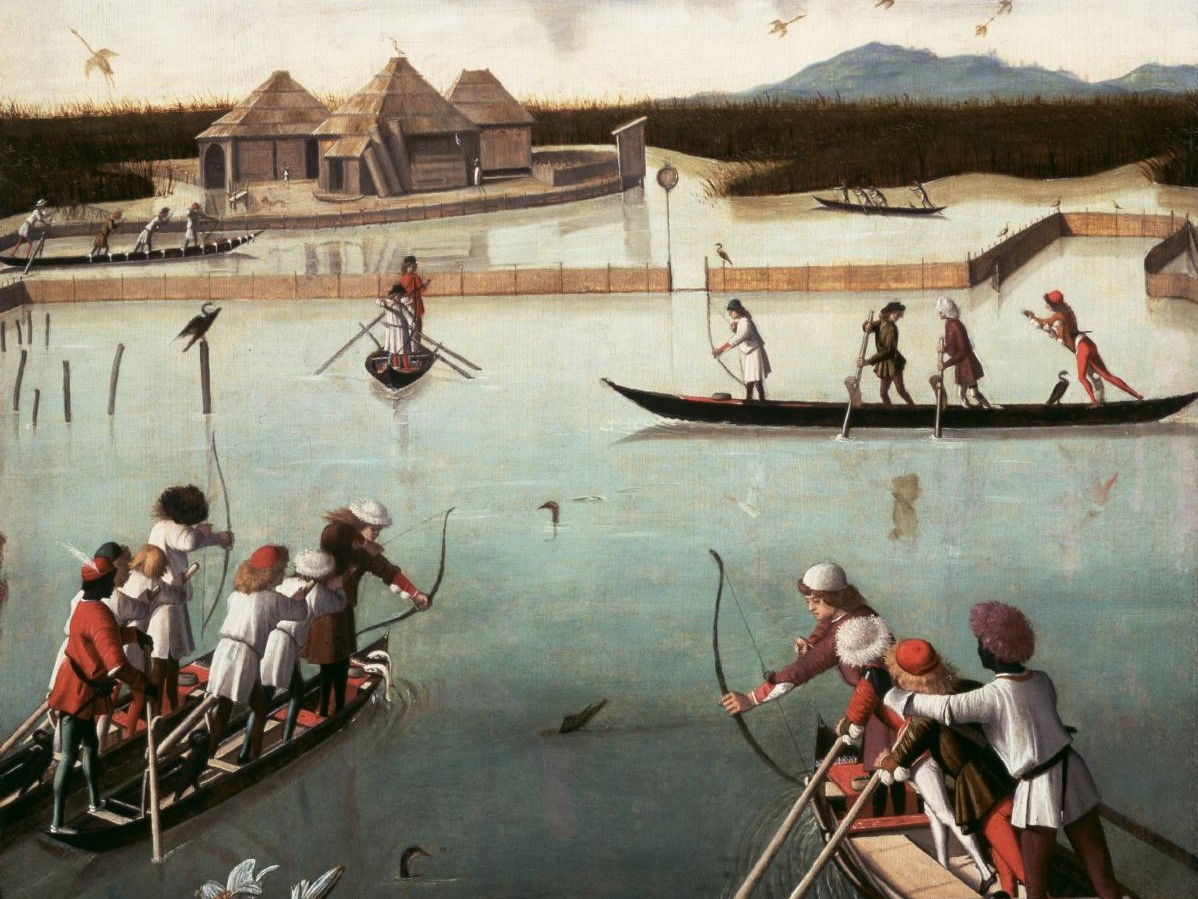
The retrospective Vittore Carpaccio in Venice opens on 18 March and will be on show until 18 June. The exhibition is curated by Peter Humfrey, a specialist on the painter and his environment, in collaboration with Andrea Bellieni, member of the board of directors of the Musei Civici di Venezia and director of the Correr Museum, and Gretchen Hirschauer, curator of Italian and Spanish painting at the National Gallery of Art in Washington.
With this magnificent exhibition, based on discoveries and new attributions, as well as extraordinarily revealing restorations, we can offer the public and scholars an updated historical-critical reinterpretation of Carpaccio’s painting and its evolution, from the beginnings to the late works, which are usually neglected by critics.
Andrea Bellieni, Director of the Correr Museum
Many of the works on display are on loan from museums, churches, institutes and private collections in Europe and the United States. These works are essential to offer a tour that documents the evolution of Carpaccio’s art in the most objective and complete way.
His works, perhaps more than those of any other Venetian Renaissance artist, embody the essence of “Venetian”, that is, the opulent spectacle and mythology of the Serenissima, which was then at its economic and cultural zenith. With this exhibition, Venice also celebrates its history, its tradition and one of its most famous painters, who through his art tells us about the city and its beauty, giving us images of everyday life from a past that comes alive again.
Luigi Brugnaro, Mayor of Venice
45 paintings with religious, profane or genre themes illustrate the artist’s great imagination, narrative and descriptive skills, as well as his skilful painting technique. A striking core of drawings, on the other hand, demonstrates his particular ability to ‘study’ reality in detail, revealing his interest in nature, perspective, the customs of his time and the effects of light.
Prices and opening hours of the exhibition Vittore Carpaccio in Venice
Until March 17, 2023, one day before the opening of the exhibition, tickets cost only 10 euros instead of 13.
The exhibition can be visited from March 18, 2023 to June 18, 2023. In March from 9 am to 6 pm, from April from 9 am to 7 pm. Last admission always until one hour before closing.
Are you planning a holiday in April and don’t know where to go? Then Venice in April is the place for you! By choosing the enchanting lagoon city as your destination, you can admire one of the most impressive cities in the world, discover its hidden corners and fully enjoy its many artistic beauties!
After the end of Carnival, in April Venice becomes “quieter” again, you can visit the city at your leisure, without the risk of getting stuck in the narrow Venetian streets crowded with tourists, but above all you can fully breathe in the Venetian spring, full of scents, colours and many activities for all tastes!
Why visit Venice in April?
With the arrival of spring, April makes the city even more enchanting. It brings out colours and unique scents that tourists can immerse themselves in and get to know Venice at its best.
It is the perfect time to take a break from everyday life. In this article you will find some useful tips on how to visit Venice in April in one day.
Thanks to the fact that there are not too many tourists during this month, you can enjoy the numerous attractions without wasting precious time in the queues that usually form at the entrances to the main sights.
Venice in mid-spring
With the arrival of the long-awaited spring, the likelihood of rainfall during this period is greatly reduced and temperatures rise by about 5 degrees compared to the previous month, so the warm weather begins to give way to the picturesque colours that make the Venetian lagoon unique.
During your holiday in Venice in April, you will experience mostly sunny and warm days, so I advise you to equip yourself with comfortable shoes and a camera to visit and immortalise the colours and the thousand facets that this season brings.
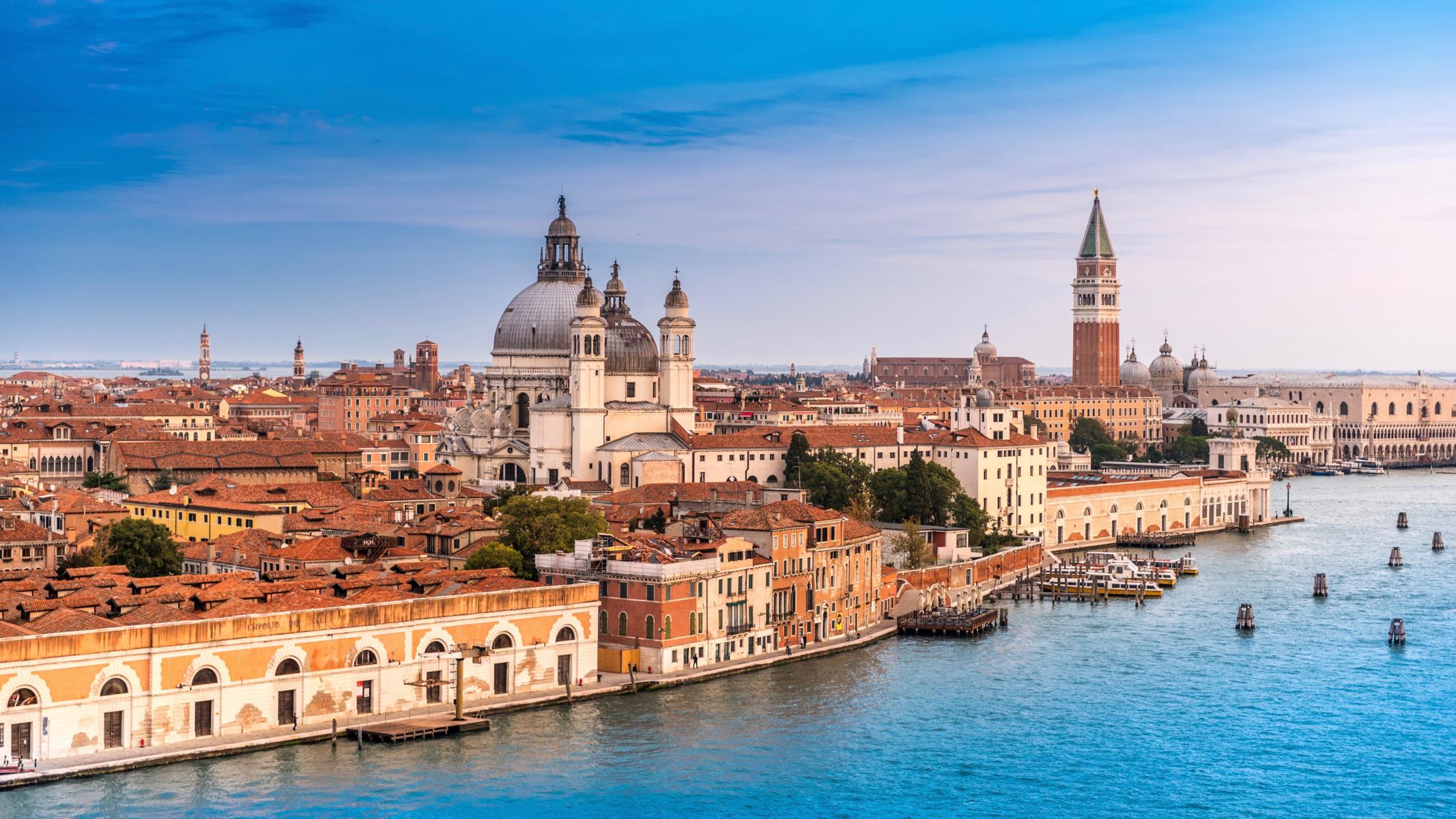
Among the many places from which you can enjoy breathtaking views, I recommend: the Bell Tower of St Mark, the Fondaco dei Tedeschi, the Rialto Bridge or, even better, one of the many islands around Venice, such as Burano, Murano or Torcello, which you can easily reach by vaporetto or by buying a ticket for a tour of the islands.
The sun is not as aggressive as in the summer, but don’t forget your sunscreen. Sunburn is never pleasant and, after the usually cold winter in northern latitudes, very likely!
What is there to see and do in Venice in April?
What to see and do in Venice in April? Although one of the most classic ways to visit Venice is to wander around the calli without a specific destination, discovering the most secret corners far from the crowds, I advise you to plan an itinerary in advance and make the most of every precious minute of your April holiday in Venice.
With the arrival of spring, the range of activities in the city multiplies. Here are some of the most popular ones:
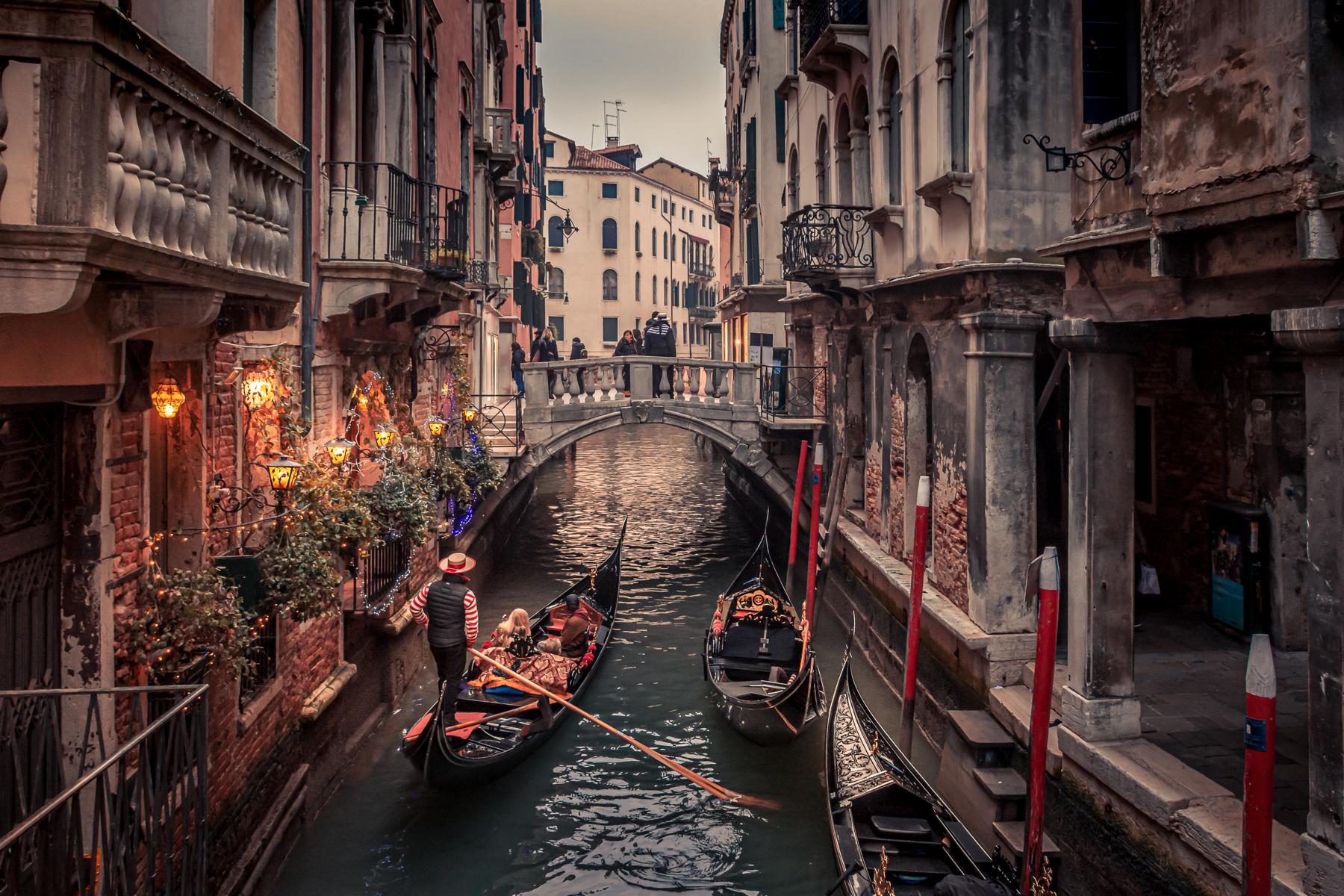
To see the main sights in one day, I recommend a long walk and a gondola ride. An experienced local guide will take you to the beautiful St Mark’s Square to discover the impressive St Mark’s Basilica. In the afternoon, take an atmospheric gondola ride over the waters of the Venetian lagoon.
This is the ideal time to visit the Venetian islands by water bus. Discover the colourful Burano and its lace, watch Murano glass being made and stroll through the ancient streets and Byzantine churches of Torcello.
To indulge in one of the most popular customs of Venice’s residents and students, opt for a bacari tour. If you don’t know what I’m talking about, read this article.
I recommend the Food & Wine tour, which takes you to some of Venice’s most characteristic osterias, each with a cicchetto and a tasting of the local wine.
Finally, in a city like Venice, a visit to the museums and historic palaces is not to be missed. They are rich in culture and bring the history of the Serenissima closer to young and old.
The best accommodations in Venice
As already mentioned, the tourist flow in Venice in April is not so big and it is very difficult to find fully booked hotels. I would still advise you to book well in advance, especially if you are planning to spend Easter or April 25th in Venice, as these days attract many tourists every year.
To make it easier for you, we have selected some of the best Venetian hotels that offer great value for money and are ideally located for exploring Venice in April:
Elegance and refinement are just two of the elements that distinguish this Bed & Breakfast: You will be satisfied because B&B Bloom is a warm and cosy place to stay. Modernity blends with classic Venetian style to create a charming décor. And don’t forget to take advantage of the terrace with a panoramic view of the Serenissima, which is B&B Bloom’s unique selling point!
Antica Locanda Sturion ***
Located on the top floor of an ancient Venetian palace, this is one of the few 3-star hotels in Venice. The interior is very charming, with typical Venetian red furniture and damask, evoking the bygone days of rich spice merchants and ambassadors from all over the world.
Among the many events that take place in April in Venice, the most important are Easter Sunday, when it falls in this month, and on April 25th in Venice. In this case it is a double celebration!
Easter – La Santa Pasqua
If Easter falls in April, remember that although it is less crowded than other holidays, it is still one of the most visited in Italy. It is therefore a good idea to book your restaurant in advance to avoid any unpleasant surprises on Easter Sunday.
Traditionally, the Easter Sunday menu in Venice in April should include a hearty seafood lunch. Therefore, there are many restaurants and osterias in the city that offer a delicious Easter menu at a fixed price on this day, ideal for organising a lunch with the whole family.
If you’re not sure which restaurant to choose, don’t hesitate to ask some Venetians, who will be happy to give you advice: not only will you be able to pay less and eat well, but you’ll also find the most characteristic places where you can enjoy the excellent dishes of the most traditional Venetian cuisine.
By the way, here are the five best fish restaurants in the lagoon city:
In the afternoon, to digest your lunch, you can take a leisurely stroll along the city’s calli or in one of the many parks: for the brave ones who still have some energy left after the exhausting Easter meal, there is also the possibility of visiting at least one of the many museums in Venice in April, which are usually open at Easter:
April 25th: Saint Mark (“bocolo”) and Liberation Day.
April 25th in Venice is a double celebration: the city celebrates not only the Day of Liberation but also the feast of St Mark the Evangelist, an ideal opportunity to soak up the festive atmosphere.
According to tradition, men are supposed to give a rose “bocolo” (rose bud) to their beloved, their daughter and their sister. This is an “unmissable gesture” on 25 April in Venice that will make you feel like a real Venetian.
To make this tradition even more romantic, I suggest you give your loved one a rosebud during a gondola ride on the Grand Canal.
On average 123 mm (4.2 inches) of rain normally falls in Venice during April with rain falling on 7 days of the month. On average it rains less frequently in March but with more precipitation (128 mm on 5 days).
The weather in this city in April is quite rough, but bearable if you wear warm clothes. The normal seasonal maximum is 18°C. The seasonal minimum is 13°C. The average temperature in Venice in April is therefore 15°C. Note that these seasonal averages are in contrast to the record highs for April in Venice, with a record high of 28°C in 2011 and a record low of 3°C in 2021. You can expect about 13 days with temperatures above 18°C.
On average, there are 13:31 hours between sunrise and sunset in Venice in April. Sunrise is at 05:26 and sunset is at 18:57. With good weather conditions, April is a great month to travel to Venice, Italy.
Insider knowledge about Venice in April
Culinary specialties in Venice
April is one of the few months of the year when you can taste moeche in the Venetian lagoon, a local term for green crabs that shed their shells during the moulting phase and become tender and soft. They are caught just as they are shedding their shells and then fried, as the original recipe says.
If you love fish, don’t miss the opportunity to try this traditional Venetian dish. Make the most of it, because it is a delicacy that can only be enjoyed during a few months of the year!
The bell tower of Saint Mark
Apart from the gastronomic aspect, there is another peculiarity about San Marco that not everyone knows: during the reign of the Serenissima, the 31st of January, commemorating the return of the relics to Venice, and the 25th of June, the date of the discovery of the place where the relics were hidden in 1094, were also dedicated to the saint.
The bell tower, which collapsed on 14 July 1902, was rebuilt in less than ten years and consecrated on April 25th, 1912, on St Mark’s day, the patron saint of Venice.
The “Domenica al Museo” initiative is a program that gives visitors access to museums and cultural sites for free in Venice and throughout Italy on the first Sunday of every month. The program was launched in 2014 to encourage more people to visit and appreciate Italy’s cultural heritage. Thus, you get into museums for free in Venice on the first Sunday of the month.
Under this initiative, visitors can visit a number of state museums, archaeological sites and other cultural institutions throughout Italy and in Venice for free. These include popular sites such as the Colosseum and Roman Forum in Rome, the Uffizi Gallery in Florence and the Accademia Gallery in Venice.
The program has been successful in attracting more visitors to cultural sites in Italy, both locals and tourists. It should be noted, however, that some sites still require advance reservations, especially during the peak tourist season, to control visitor numbers and ensure visitor safety and enjoyment.
Free Museums in Venice – on the first Sunday of the month many museums in Venice are free.
Admission to the free museums in Venice: “Domenica al museo”
Venice has an immense artistic heritage. There is art almost everywhere, even in the most unexpected places. That is why I can easily say that Venice, like some other Italian cities, is a huge open-air museum.
The lagoon city has an artistic and cultural heritage that spans centuries and is preserved in museums, palaces and art sites for all to enjoy.
Did you know that there are also art sites that cost nothing? In addition to the most important and famous museums in Italy, there are many interesting free museums in Venice and other Italian cities that are worth visiting this year.
In this article, I have put together a guide to free museums in Venice as part of the “Sunday at the Museum” initiative “Domenica al Museo”, so that you too can go to the museum for free in Venice on Sundays.
The Mystery and Intrigue of Venice in Literature
Reading books about Venice can enhance your experience of the city in many ways
They can help you understand the historical and cultural context better. Venice has a very exciting and rich history and culture, which can be difficult to understand without some background knowledge. Books can provide this context and help you understand the city’s art, architecture and traditions.
The lagoon city has also been the setting for many famous literary works, including Shakespeare’s The Merchant of Venice and Thomas Mann’s Death in Venice. Reading these works can deepen your connection with the city and give you new insights into its culture and history.
Which museums support the “Domenica al Museo” initiative?
The Municipal Museums participating are numerous, but the offer does not include admission to special exhibitions. So, if you want to visit a current exhibition in one of the museums in Venice for free, I suggest you first check the official website of the museum and the exhibition and, if necessary, check the website you can find in my list below.
Here is the official video of the Italian Ministry of Culture:
Free museums in Venice: calendar and dates 2023
February 5, 2023
March 5, 2023
April 2, 2023
May 7, 2023
June 4, 2023
July 2, 2023
August 6, 2023
September 3, 2023
October 1, 2023
November 5, 2023
December 3, 2023
Who is the Sundays in the Museum initiative in Venice for?
The “Sundays in the Museum” initiative provides free entry to all State museums and archaeological sites for all citizens on the first Sunday of every month.
In addition, the initiative provides admission to all municipal museums for free in Venice that are part of the “Sistema Musei in Comune”. Previously this was only available to residents of the city, but now tourists can also benefit from free entry to the city’s museums.
Now that everything is clear, here are my personal tips on how to spend a special Sunday full of culture and discover wonderful places without spending a single euro.
A final note on the list of free museums in Venice
Before I start with the list of free museums in Venice on Sundays, I’d like to make a quick recommendation:
Since the “Sundays at the Museum” initiative has been very successful, it is very likely that the museums will be besieged by locals and tourists and you may have to wait in line for a long time before you can get in.
I would therefore advise you to start with one of the large and well-known museums and then, if you have time, visit a smaller and lesser-known museum so that you don’t have to wait in line again.
Comfortable shoes, as is often the case, play a crucial role in getting you through the day.
By the way, you can find my personal packing list for Venice here:
Free Museums in Venice – on the first Sunday of the month many museums in Venice are free.
The museums in Venice you can visit for free
Don’t miss the chance to see the most beautiful city in the world and visit the most important museums in Venice for free. If you read on, I’ll show you all the museums participating in the “Free Sundays at the Museum” initiative in Venice, so you won’t be caught off guard!
Free museums in Venice
Below is a list of all the museums in Venice participating in the “Domenica al Museo” promotion. The last admission is usually one hour before closing time.
Gallerie dell’Accademia di Venezia
The Gallerie dell’Accademia di Venezia is an art museum in the Dorsoduro district of Venice, Italy. It is located on the south bank of the Grand Canal, near the Ponte dell’Accademia. The museum houses an impressive collection of pre-19th century Venetian art, including works by Bellini, Carpaccio, Tintoretto, Veronese and Titian.
This volume Treasures of Venetian Painting – the Gallerie Dell’Accademia* provides an encounter with important works from the Galleria dell’Accademia in Venice. These are masterpieces from five centuries by artists such as the Bellinis, Carpaccio, Giorgione, Titian, Tintoretto, Veronese, father and son Tiepolo and the veduta painters Canaletto and Guardi.
The museum is housed in the Scuola Grande della Carità, a former charitable institution that was converted into an art gallery in the early 19th century. The building was converted into an art gallery in the early 19th century. The building itself is an impressive example of Venetian Baroque architecture, with grand staircases and high ceilings.
This is one of the most important museums, so it is usually quite crowded.
Biblioteca nazionale Marciana – Sale monumentali e Ridotti dei Procuratori
The Biblioteca Nazionale Marciana (National Library of St Mark’s Basilica) is a historic library located in Piazzetta San Marco, next to the Doge’s Palace and St Mark’s Basilica. The library was founded at the end of the 16th century and contains over a million volumes, including rare manuscripts, incunabula and early prints.
The Sale Monumentali e Ridotti dei Procuratori is one of the most impressive areas of the library. It is a sumptuous room decorated with elaborate paintings and frescoes on the walls and ceilings. Originally used for political meetings of the Republic of Venice, it is now used as an exhibition space for the rare and valuable collections of the Library.
The Museo d’Arte Orientale Venezia, also known as the Museum of Oriental Art, is a museum located in the Santa Croce district of Venice, Italy. It is housed in the Palazzo Pesaro Papafava, a 17th century palace that has been restored to house the museum’s collection.
The museum has a large collection of Asian art with over 30,000 objects from China, Japan, India and other parts of Asia. The collection includes paintings, sculpture, ceramics, textiles and other decorative arts. Many of the objects were acquired by Italian merchants and travellers in the 18th and 19th centuries.
The Museo di Palazzo Grimani is a museum located in the Santa Maria Formosa district of Venice, Italy. The museum is housed in Palazzo Grimani, a Renaissance palace that once belonged to one of Venice’s most influential families. The museum houses a collection of artworks and antiques that once belonged to the Grimani family, as well as works from other private collections.
Palazzo Grimani itself is an architectural masterpiece with an impressive façade and a unique layout designed to showcase the family’s wealth and power. The museum’s collection includes many of the palace’s original furnishings and decorations, as well as a number of important works of art from various periods of Venetian history.
The Galleria Franchetti alla Ca’ d’Oro is an art museum located in the Ca’ d’Oro Palace on the Grand Canal in Venice, Italy. The museum displays a wide range of Gothic, Renaissance and Baroque art, including works by famous artists such as Titian, Bellini and Tintoretto.
The palace itself is a fine example of Venetian Gothic and was built in the 15th century for the Contarini family. It was later acquired by the Grimani family before being sold to Baron Giorgio Franchetti, who finally donated it to the Italian State in 1916.
Warning: The English version of the website is incomplete and apparently not maintained.
The Museo Archeologico Nazionale (National Archaeological Museum) in Venice is dedicated to the history and archaeology of the Veneto region. The museum is housed in the beautiful Renaissance Palazzo Loredan Vendramin Calergi, overlooking the Grand Canal in the Cannaregio district.
The museum’s collections are divided into several sections, including prehistoric and early historic archaeology, ancient Greek and Roman art, and Byzantine and medieval art and archaeology. The museum’s most famous exhibit is the Winged Lion of St Mark, the symbol of the Republic of Venice.
If you are looking for other interesting activities in Venice, here you can find the best tours in the lagune city:
Free museums in the county of Venice (mainland)
Concordia Sagittaria, archaeological area beneath the Cathedral
Concordia Sagittaria is an archaeological site located about 50 kilometres north-east of Venice. It is located below the present day Cathedral of Santa Maria Assunta in the town of Concordia Sagittaria.
The site was originally an ancient Roman town founded in the 1st century AD and was an important centre for trade and commerce. Over the centuries it was conquered by various invading powers, including the Lombards and the Franks, before being conquered by the Venetians in the 16th century.
The archaeological site contains the remains of ancient Roman buildings such as a theatre, an amphitheatre, a forum and a basilica. Visitors can also see the remains of medieval buildings, including a baptistery, a crypt and the foundations of the cathedral.
Museo archeologico nazionale Concordiese di Portogruaro
The Museo Archeologico Nazionale Concordiese di Portogruaro is a national archaeological museum located in the town of Portogruaro, 60km north-east of Venice. The museum is dedicated to the archaeology and history of the ancient Venetian city of Concordia Sagittaria, which was an important trading centre in Roman times and is located just a few kilometres from Portogruaro.
The museum’s collection includes a variety of archaeological artefacts from the ancient city, including mosaics, sculptures, ceramics and other objects related to daily life in ancient Concordia. One of the highlights of the museum is a large Roman mosaic from the 4th century AD, discovered in the nearby town of Pramaggiore.
The Museo Archeologico di Quarto d’Altino is an archaeological museum located in the town of Quarto d’Altino, about 20 km north of Venice. The museum displays artefacts and exhibits related to the ancient Roman city of Altinum, which was located in the area and was an important trading centre.
The museum’s collection includes a variety of objects, including pottery, coins, jewellery and architectural fragments, as well as information about the history and daily life of the city. Among the most notable items in the collection are a statue of the goddess Venus, a large mosaic floor and a collection of ancient Roman glass.
The Museo Nazionale di Archeologia del Mare di Caorle is a national museum located in the town of Caorle, 55 km east of Venice. The museum is dedicated to the archaeology of the sea, focusing on the history of maritime activities and trade in the Adriatic.
The museum’s collection includes a wide range of archaeological artefacts, including ancient shipwrecks, tools and equipment used by sailors and fishermen, and objects related to trade in the Adriatic.
One of the highlights of the museum are several well-preserved Roman ships discovered in the waters off the coast of Caorle. These ships date back to the 1st century BC and were probably used for trade and transport in the Adriatic.
The Museo Nazionale di Villa Pisani is a national museum located in the town of Stra, 30 km west of Venice. The museum is housed in the magnificent Villa Pisani, a historic palace built in the 18th century for the noble Pisani family.
The museum’s collection includes a range of paintings, sculptures and other works of art from the 18th and 19th centuries, including works by famous Italian artists such as Giambattista Tiepolo and Francesco Guardi.
In addition to the art collection, the museum also offers the opportunity to explore the villa’s magnificent gardens, with their manicured lawns, fountains and other decorative features. The gardens are laid out in the classical Italian style, with symmetrical paths and flower beds arranged around a central axis.
,_La_Cena_in_Emmaus,_279699.jpg)