In April, Nu Fest 2023 in Venice celebrates their memory and spirit with two events, on April 6th at the Fondaco dei Tedeschi and on April 29th at the Teatrino di Palazzo Grassi, with the projects Solaris (Giorgio Li Calzi-Manuel Zigante) and Impro Brain Sound Pod (Paolo Dellapiana-Valeria Sturba).
What is the Nu Fest 2023 in Venice?
Nu Fest is Veneto Jazz’s signature festival of electronic and contemporary music, founded in 2007 by Marcello Mormile, the festival’s artistic director.
His knowledge of experimental music and his innate intuitive sensitivity to the discovery of new musical trends in this field met the history and structure of Veneto Jazz, giving birth to unprecedented projects such as Nørdic Frames, a festival dedicated to Nordic production, and unforgettable events.
The events of Nu Fest 2023 in Venice
April 6th: Solaris at Fondaco dei Tedeschi
In Solaris, at the Fondaco dei Tedeschi on April 6, two different musical paths converge on an original common ground, inspired by Tarkovsky’s film of the same name.
The project, born in 1986 from the encounter between Zigante’s cello and the electroacoustic sounds of Li Calzi’s trumpet, traverses electroacoustic improvisation, electronics and contemporary rewriting of Bach and Artemyev’s classicism.
Tickets
Free admission by reservation only, by writing to fondaco.culture@dfs.com. Entrance 15 minutes before the start time of the event.
Manuel Zigante, a cello graduate of the Santa Cecilia Conservatory in Rome, is the founder of the Turin String Quartet under the direction of Piero Farulli (Quartetto Italiano) and the composer Gyorgy Kurtág, with whom he has performed extensively.
Giorgio Li Calzi, composer, trumpeter and music producer, is a cultural promoter and director of performance productions. He has produced jingles for many Italian brands like FIAT or Birra Moretti, he has composed music for theater and dance, played with musicians such as Wolfgang Flür (Kraftwerk), Lenine, Jon Balke, Marconi Union, and recorded during the 2020 lockdown with Arto Lindsay, Thomas Feiner, Frank Bretschneider, Stefan Németh, and the poet Chandra Livia Candiani.
April 29th: Impro Brain Sound Pod at Palazzo Grassi
Architect and electronic musician, Paolo Dellapiana is a transversal figure of the international experimental scene, former member of the Turin cult band Larsen since 1996.
As part of Nu Fest, he signs this new project with the multi-instrumentalist and singer Valeria Sturba, who crosses electroacoustic instruments with complex modular systems elaborated ad hoc, in a continuous search for avant-garde sound layering.
Both with Larsen and on his own, Paolo Dellapiana has presented his music with extensive tours and concerts throughout Europe and the United States. He has shared the stage with legends such as Einsturzende Neubauten, Swans, Neurosis, Breach, Crash Worship, Ulan Bator, Michael Gira, My Cat Is An Alien, Allun, Ronin, The Living Jarboe, Backworld, Xiu Xiu, Thalia Zedek, Dresden Dolls, Amber Asylum, Current 93, Johann Johann Johannsson, Baby Dee, Fovea Hex, Piano Magic, The Dead Texan.
Valeria Sturba is a multi-instrumentalist, singer and composer. A violinist by training, she plays theremin, keyboards, synthesizers, electronic effects, loopers and sound toys, crossing electroacoustic instruments with complex ad hoc modular systems in a constant search for avant-garde sound layering.
She has participated in many national and international festivals such as Umbria Jazz, Electromagnetica (Chile), B-Classic (Belgium), Dong! (Denmark), Tectonics (Scotland), Dancity, RoBOt. He has collaborated with many artists such as Tristan Honsinger, Ernst Reijseger, Enrico Gabrielli and Calibro35, Stefano Bollani, John De Leo, Cristina Donà, Stefano Benni, Hamid Drake, Lino Guanciale, Anna Maria Hefele, Giancarlo Schiaffini.
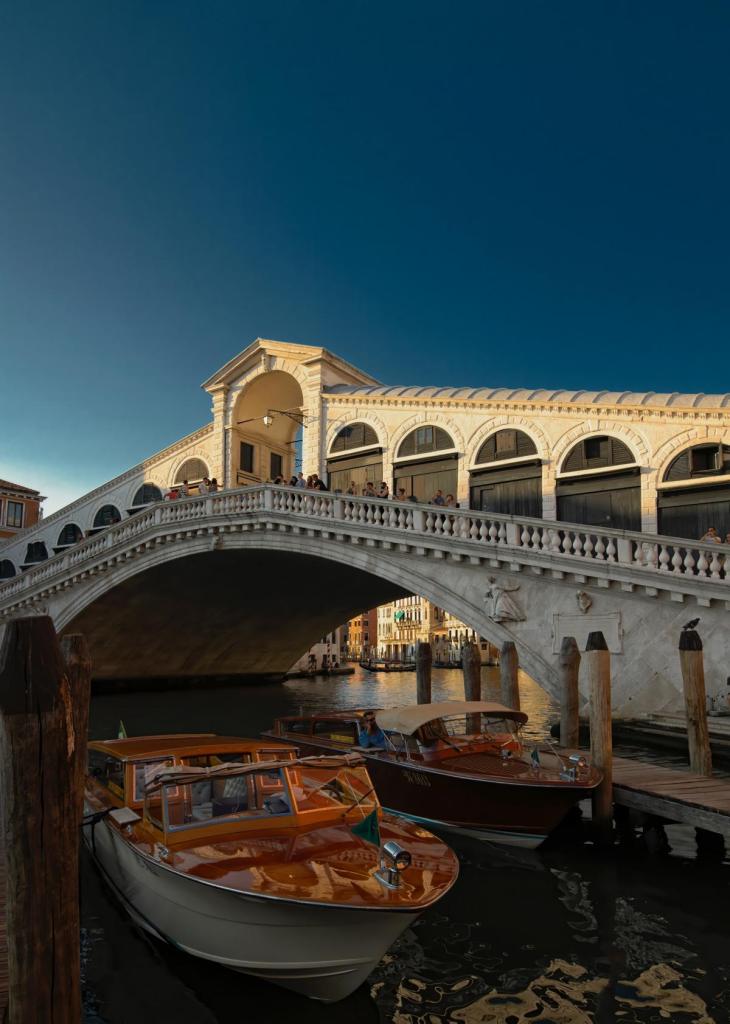
If you are planning a day trip to Venice, there are a few sights you should not miss. One of them is the majestic “Ponte di Rialto” or Rialto Bridge, immortalized by artists like Canaletto and even mentioned by Shakespeare, whose Shylock in The Merchant of Venice asks, “What’s new on the Rialto?”
Whether you’re planning a romantic getaway in Venice or wondering what to do with your family, the Rialto Bridge should be on your itinerary.
History of the Rialto Bridge
The Rialto Bridge was built to provide access to the Rialto Market and to connect the San Marco and San Polo districts. It is the oldest bridge over the Canal Grande. The bridge in its current form dates back to 1591, but its history goes back much further.
It was originally a pontoon bridge built in 1181, which was replaced by a wooden structure in 1255. It was damaged by fire during a riot in 1310 and then collapsed twice – the first time in 1444 under the weight of people using it as a lookout point for a regatta, and then again in 1524.
The bridge as we know it today is the result of decades of proposals by famous architects who competed to design a sturdy replacement for the wooden stone bridge. Among the architects who participated in the competition were Michaelangelo and Palladio, an architect best known today for his impressive country villas.
Accommodation near the Rialto bridge?
The location of this 4-star hotel is ideal for exploring and discovering the city. Imagine sitting at the window of your Junior Suite and admiring the Rialto Bridge. Under the arch of the bridge, gondolas and boats constantly cross the Grand Canal and the vaporetti stop just steps from the hotel to bring all of Venice to you.
In the end, Antonio da Ponte’s design was chosen, similar to the previous wooden bridge, and construction of the new marble bridge began in 1588. It was opened in 1591 and was the only place to cross the Grand Canal on foot until the construction of the Accademia Bridge in 1854. Today it is one of the most popular tourist attractions in Venice.
There are many shops on the Rialto Bridge, most of them selling luxury goods such as jewelry, watches or Murano glass. There were shops on the first wooden bridge in 1250; at that time the city financed the maintenance of the bridge from the rent of the rooms.
Fun fact: The rent for about 16m² on the bridge (8m² ground floor, 8m² first floor) is about 5,000 euros/month.
Do you want to discover Venice on your own?
Discovering Venice on your own can be an exciting and rewarding experience. A travel book will be a valuable resource where to look up historical and cultural information, as well as practical information and language tips.
Here you can find my personal recommendations on the best Venice travel guides:
The location of the Rialto Bridge makes it possible to capture the splendid atmosphere of the sunset over the Grand Canal in the southwest; the reddish sky and the last rays of the sun are reflected on the water, illuminating the bright palaces along the canal with a warm light. Venice is certainly not lacking in romantic atmosphere, but the city is even more beautiful at sunset.
Some technical details about the Ponte di Rialto
One of the most impressive features of the Rialto Bridge is its construction. The bridge is held together by a series of interlocking stones and a unique system of dovetail joints, which allowed the structure to withstand the weight of heavy traffic and the forces of the Grand Canal.
The Rialto Bridge has a single span with a height of 7.5 meters and a width of 22 meters. The bridge is supported by two ramps leading to a central portico with three arches. The portico is lined with shops and the arches are decorated with statues of St. Mark, St. Theodore and the Annunciation.
The architecture of the Rialto Bridge is also notable for its elegance and simplicity. The design of the bridge is characterized by clean lines and a sense of symmetry, creating a harmonious and pleasing appearance. The use of Istrian stone also gives the bridge a warm and inviting appearance, making it a popular destination for tourists and locals alike.
Where is the Rialto Bridge located in Venice?
A walk across the Rialto Bridge is at the top of the list of romantic things to do in Venice, as it offers a beautiful view of the Grand Canal and numerous small souvenir shops.
If you’re wondering how to get to the Rialto Bridge, there are several options. You can walk north from St. Mark’s Square through the quaint streets of the city to the Grand Canal – you can’t miss the Rialto Bridge! Or take a water bus and get off at the Rialto Bridge stop. Get your camera ready for one of Venice’s most breathtaking sights… The Rialto Bridge is one of the best photo opportunities in Venice!
Fondaco dei Tedeschi
The luxury shopping center on the Grand Canal, in an ancient thirteenth-century palace, offers not only three floors of priceless brand-name goods in the middle of the oldest part of Venice, but also a free visit to the roof terrace with breathtaking views of the canal and the Rialto Bridge. However, this is only possible with prior booking: 15-minute slots are offered from 10:30 to 18:30.
Tip: Book two slots in a row. You can show both bookings at the first control, so that you stay on the roof terrace during the "shift change" and are not sent back to the waiting hall. That way you have the terrace for a minute or two just for you and your photos; tripods have been allowed, by the way.
The name suggests that the building served as a settlement for German-speaking merchants and craftsmen in the late Middle Ages and Renaissance; even the Fuggers had a trading post here. Today, the premises still have signs and coats of arms of various merchants engraved on columns, shelves, windows, walls, facades and plinths to claim the space for themselves.
Venice is one of the world’s most beautiful cities. No wonder tourists flock there to experience it for themselves. But what are the biggest tourist traps in Venice and how can you avoid falling into them?
Here are some numbers and trivia to learn more about the Rialto Bridge:
The Rialto Bridge is 28 meters long and 22 meters wide; the average height above the water is 7.5 meters.
From 1591 until 1854 (when the Accademia Bridge was completed), the Rialto Bridge was the only way to cross the Grand Canal on foot.
The design of the bridge was considered daring, but it turned out to be very successful: no maintenance was needed for over a century. The first restoration was carried out in 1738.
There are 24 shops on the Rialto Bridge, 12 on each side.
There are three pedestrian crossings: a central one, about 10 meters wide; two lateral ones, about 3 meters wide.
To cross the bridge you have to climb 80 to 120 steps, depending on which passage you use and where you come from.
The bas-reliefs that decorate the bridge include a man with a third leg and a woman crouching over the flames. According to Venetian legend, they represent two merchants who opposed the construction of the bridge because they were skeptical about its ability to bear weight.
The bas-reliefs depicting St. Mark and St. Theodore are by Tiziano Aspetti, a 16th century Venetian sculptor who was very active in Venice.
The name Rialto comes from the Latin “Rivus altus”, which can be translated into Italian as “deep canal”: this expression was probably used to indicate that the area was free from flooding.
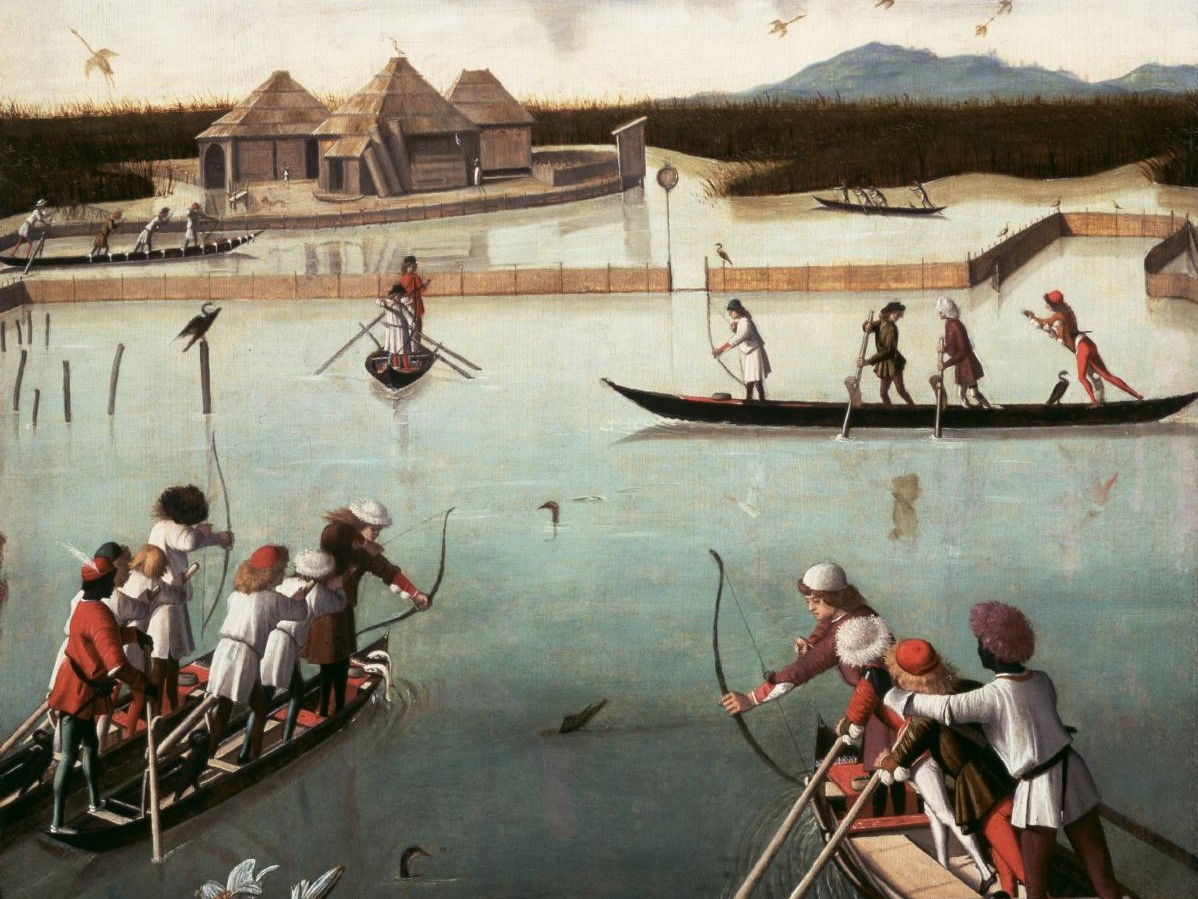
The retrospective Vittore Carpaccio in Venice opens on 18 March and will be on show until 18 June. The exhibition is curated by Peter Humfrey, a specialist on the painter and his environment, in collaboration with Andrea Bellieni, member of the board of directors of the Musei Civici di Venezia and director of the Correr Museum, and Gretchen Hirschauer, curator of Italian and Spanish painting at the National Gallery of Art in Washington.
With this magnificent exhibition, based on discoveries and new attributions, as well as extraordinarily revealing restorations, we can offer the public and scholars an updated historical-critical reinterpretation of Carpaccio’s painting and its evolution, from the beginnings to the late works, which are usually neglected by critics.
Andrea Bellieni, Director of the Correr Museum
Many of the works on display are on loan from museums, churches, institutes and private collections in Europe and the United States. These works are essential to offer a tour that documents the evolution of Carpaccio’s art in the most objective and complete way.
His works, perhaps more than those of any other Venetian Renaissance artist, embody the essence of “Venetian”, that is, the opulent spectacle and mythology of the Serenissima, which was then at its economic and cultural zenith. With this exhibition, Venice also celebrates its history, its tradition and one of its most famous painters, who through his art tells us about the city and its beauty, giving us images of everyday life from a past that comes alive again.
Luigi Brugnaro, Mayor of Venice
45 paintings with religious, profane or genre themes illustrate the artist’s great imagination, narrative and descriptive skills, as well as his skilful painting technique. A striking core of drawings, on the other hand, demonstrates his particular ability to ‘study’ reality in detail, revealing his interest in nature, perspective, the customs of his time and the effects of light.
Prices and opening hours of the exhibition Vittore Carpaccio in Venice
Until March 17, 2023, one day before the opening of the exhibition, tickets cost only 10 euros instead of 13.
The exhibition can be visited from March 18, 2023 to June 18, 2023. In March from 9 am to 6 pm, from April from 9 am to 7 pm. Last admission always until one hour before closing.
Are you planning a holiday in April and don’t know where to go? Then Venice in April is the place for you! By choosing the enchanting lagoon city as your destination, you can admire one of the most impressive cities in the world, discover its hidden corners and fully enjoy its many artistic beauties!
After the end of Carnival, in April Venice becomes “quieter” again, you can visit the city at your leisure, without the risk of getting stuck in the narrow Venetian streets crowded with tourists, but above all you can fully breathe in the Venetian spring, full of scents, colours and many activities for all tastes!
Why visit Venice in April?
With the arrival of spring, April makes the city even more enchanting. It brings out colours and unique scents that tourists can immerse themselves in and get to know Venice at its best.
It is the perfect time to take a break from everyday life. In this article you will find some useful tips on how to visit Venice in April in one day.
Thanks to the fact that there are not too many tourists during this month, you can enjoy the numerous attractions without wasting precious time in the queues that usually form at the entrances to the main sights.
Venice in mid-spring
With the arrival of the long-awaited spring, the likelihood of rainfall during this period is greatly reduced and temperatures rise by about 5 degrees compared to the previous month, so the warm weather begins to give way to the picturesque colours that make the Venetian lagoon unique.
During your holiday in Venice in April, you will experience mostly sunny and warm days, so I advise you to equip yourself with comfortable shoes and a camera to visit and immortalise the colours and the thousand facets that this season brings.
Among the many places from which you can enjoy breathtaking views, I recommend: the Bell Tower of St Mark, the Fondaco dei Tedeschi, the Rialto Bridge or, even better, one of the many islands around Venice, such as Burano, Murano or Torcello, which you can easily reach by vaporetto or by buying a ticket for a tour of the islands.
The sun is not as aggressive as in the summer, but don’t forget your sunscreen. Sunburn is never pleasant and, after the usually cold winter in northern latitudes, very likely!
What is there to see and do in Venice in April?
What to see and do in Venice in April? Although one of the most classic ways to visit Venice is to wander around the calli without a specific destination, discovering the most secret corners far from the crowds, I advise you to plan an itinerary in advance and make the most of every precious minute of your April holiday in Venice.
With the arrival of spring, the range of activities in the city multiplies. Here are some of the most popular ones:
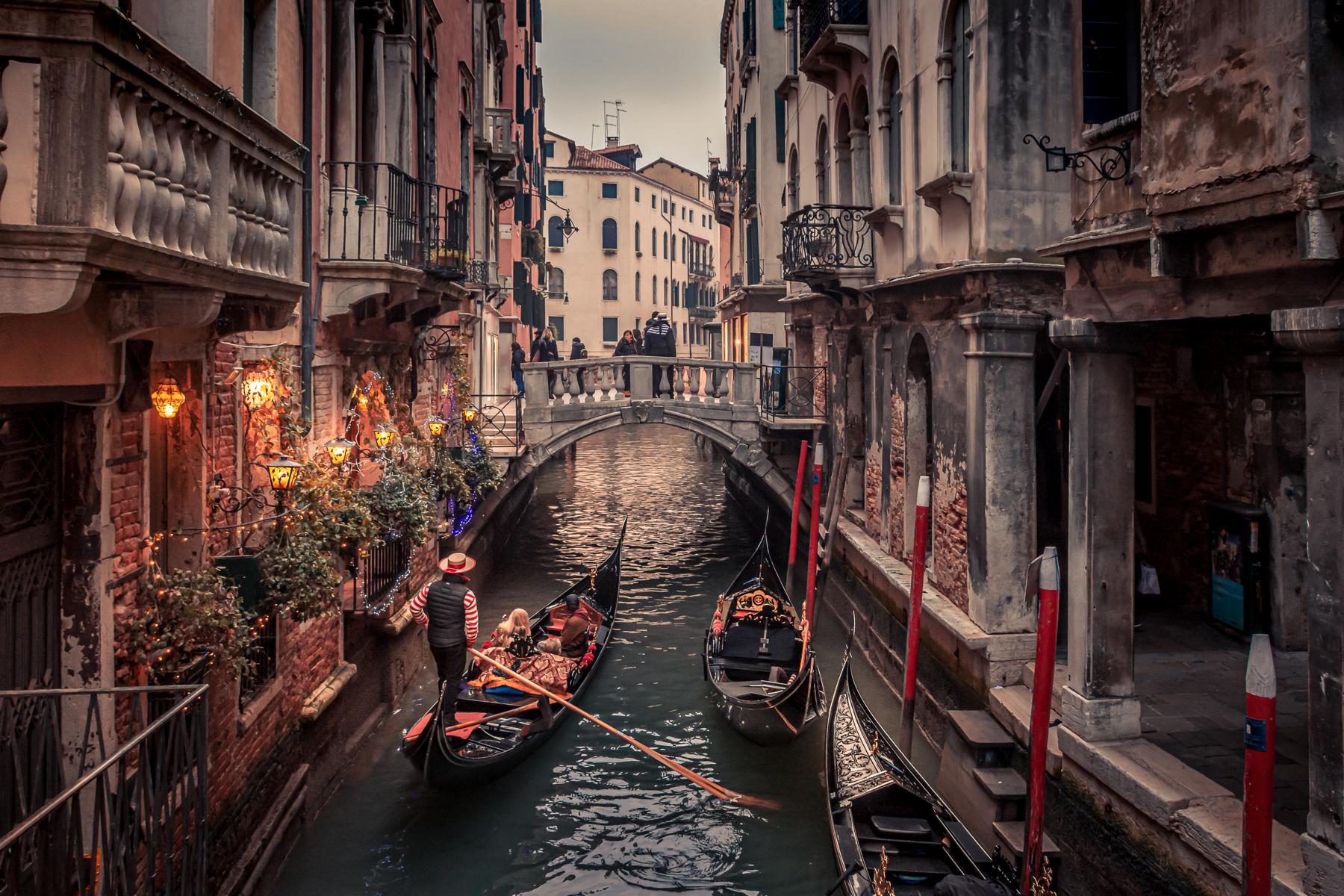
To see the main sights in one day, I recommend a long walk and a gondola ride. An experienced local guide will take you to the beautiful St Mark’s Square to discover the impressive St Mark’s Basilica. In the afternoon, take an atmospheric gondola ride over the waters of the Venetian lagoon.
This is the ideal time to visit the Venetian islands by water bus. Discover the colourful Burano and its lace, watch Murano glass being made and stroll through the ancient streets and Byzantine churches of Torcello.
To indulge in one of the most popular customs of Venice’s residents and students, opt for a bacari tour. If you don’t know what I’m talking about, read this article.
I recommend the Food & Wine tour, which takes you to some of Venice’s most characteristic osterias, each with a cicchetto and a tasting of the local wine.
Finally, in a city like Venice, a visit to the museums and historic palaces is not to be missed. They are rich in culture and bring the history of the Serenissima closer to young and old.
The best accommodations in Venice
As already mentioned, the tourist flow in Venice in April is not so big and it is very difficult to find fully booked hotels. I would still advise you to book well in advance, especially if you are planning to spend Easter or April 25th in Venice, as these days attract many tourists every year.
To make it easier for you, we have selected some of the best Venetian hotels that offer great value for money and are ideally located for exploring Venice in April:
Elegance and refinement are just two of the elements that distinguish this Bed & Breakfast: You will be satisfied because B&B Bloom is a warm and cosy place to stay. Modernity blends with classic Venetian style to create a charming décor. And don’t forget to take advantage of the terrace with a panoramic view of the Serenissima, which is B&B Bloom’s unique selling point!
Antica Locanda Sturion ***
Located on the top floor of an ancient Venetian palace, this is one of the few 3-star hotels in Venice. The interior is very charming, with typical Venetian red furniture and damask, evoking the bygone days of rich spice merchants and ambassadors from all over the world.
Among the many events that take place in April in Venice, the most important are Easter Sunday, when it falls in this month, and on April 25th in Venice. In this case it is a double celebration!
Easter – La Santa Pasqua
If Easter falls in April, remember that although it is less crowded than other holidays, it is still one of the most visited in Italy. It is therefore a good idea to book your restaurant in advance to avoid any unpleasant surprises on Easter Sunday.
Traditionally, the Easter Sunday menu in Venice in April should include a hearty seafood lunch. Therefore, there are many restaurants and osterias in the city that offer a delicious Easter menu at a fixed price on this day, ideal for organising a lunch with the whole family.
If you’re not sure which restaurant to choose, don’t hesitate to ask some Venetians, who will be happy to give you advice: not only will you be able to pay less and eat well, but you’ll also find the most characteristic places where you can enjoy the excellent dishes of the most traditional Venetian cuisine.
By the way, here are the five best fish restaurants in the lagoon city:
In the afternoon, to digest your lunch, you can take a leisurely stroll along the city’s calli or in one of the many parks: for the brave ones who still have some energy left after the exhausting Easter meal, there is also the possibility of visiting at least one of the many museums in Venice in April, which are usually open at Easter:
April 25th: Saint Mark (“bocolo”) and Liberation Day.
April 25th in Venice is a double celebration: the city celebrates not only the Day of Liberation but also the feast of St Mark the Evangelist, an ideal opportunity to soak up the festive atmosphere.
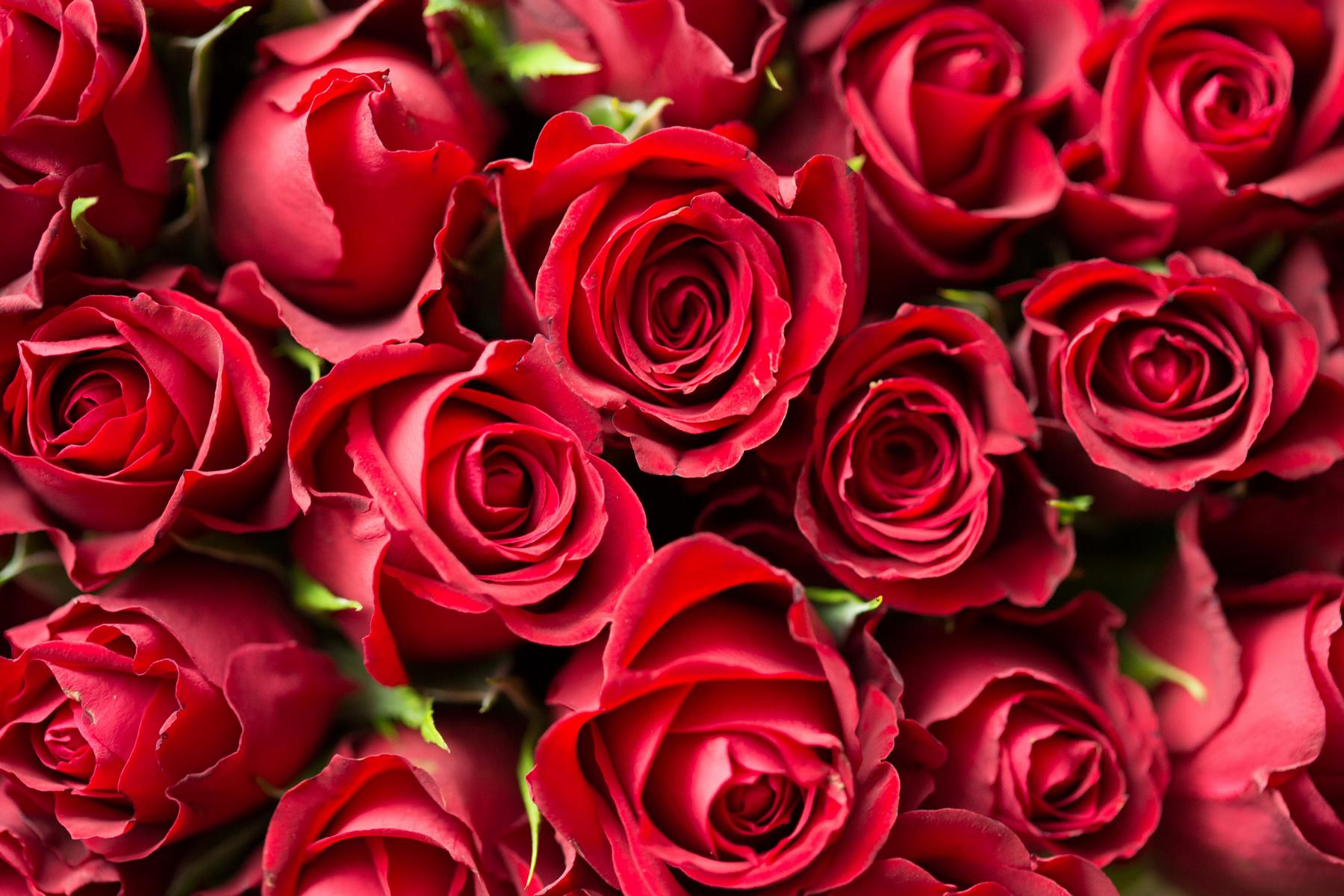
According to tradition, men are supposed to give a rose “bocolo” (rose bud) to their beloved, their daughter and their sister. This is an “unmissable gesture” on 25 April in Venice that will make you feel like a real Venetian.
To make this tradition even more romantic, I suggest you give your loved one a rosebud during a gondola ride on the Grand Canal.
On average 123 mm (4.2 inches) of rain normally falls in Venice during April with rain falling on 7 days of the month. On average it rains less frequently in March but with more precipitation (128 mm on 5 days).
The weather in this city in April is quite rough, but bearable if you wear warm clothes. The normal seasonal maximum is 18°C. The seasonal minimum is 13°C. The average temperature in Venice in April is therefore 15°C. Note that these seasonal averages are in contrast to the record highs for April in Venice, with a record high of 28°C in 2011 and a record low of 3°C in 2021. You can expect about 13 days with temperatures above 18°C.
On average, there are 13:31 hours between sunrise and sunset in Venice in April. Sunrise is at 05:26 and sunset is at 18:57. With good weather conditions, April is a great month to travel to Venice, Italy.
Insider knowledge about Venice in April
Culinary specialties in Venice
April is one of the few months of the year when you can taste moeche in the Venetian lagoon, a local term for green crabs that shed their shells during the moulting phase and become tender and soft. They are caught just as they are shedding their shells and then fried, as the original recipe says.
If you love fish, don’t miss the opportunity to try this traditional Venetian dish. Make the most of it, because it is a delicacy that can only be enjoyed during a few months of the year!
The bell tower of Saint Mark
Apart from the gastronomic aspect, there is another peculiarity about San Marco that not everyone knows: during the reign of the Serenissima, the 31st of January, commemorating the return of the relics to Venice, and the 25th of June, the date of the discovery of the place where the relics were hidden in 1094, were also dedicated to the saint.
The bell tower, which collapsed on 14 July 1902, was rebuilt in less than ten years and consecrated on April 25th, 1912, on St Mark’s day, the patron saint of Venice.
It is well known that Venetians are womanisers. Casanova’s fame precedes us a little, but we know how to be just as romantic, so today I’m going to tell you about a festival I love: St Mark’s day and the Festa del Boccolo (Bocolo) on April 25th in Venice.
April 25th in Venice is not only the feast day of the patron saint of Venice, St Mark, but also the day when young Venetian lovers give their “sweetheart” a rosebud. So much for Valentine’s Day!
St Mark’s Day in Venice
The patron saint of Venice is St Mark, whose feast day is celebrated every year on April 25th. This day is known as “Festa di San Marco” (St Mark’s Day) and is an important holiday in Venice. The day is celebrated with church services, processions and other festivities throughout the city to commemorate the date of the discovery of the site where the relics were hidden in 1094.
St Mark’s Day in Venice is one of the most important events in the city, an ancient tradition linked to the historic transfer of the remains of St Mark, the city’s patron saint of Venice, to the Serenissima, which took place on 31 January.
Saint Mark is an important figure in the history and culture of Venice, being the patron saint of Venice and the symbol of Venetian identity. The famous St Mark’s Basilica in Venice is dedicated to him and his image can be found throughout the city in various forms of art and architecture.
Festa del Bocolo
This is a tradition linked to St Mark’s Day: The Festa del Bocolo is the custom of giving a rosebud to a loved one on St Mark’s Day.
This is the patron saint’s day of Venice, celebrated in memory of St Mark the Evangelist. In our city it is customary for the men to give the women of the family a red rosebud, in dialect bòccolo: at least one rose a year!
It is said that this custom has its origins in a legend: in the nineteenth century, a blonde girl called Maria, daughter of the future Doge Angelo Partecipazio, fell in love with the very brave and handsome troubadour Tancredi. The feelings of the two young people were rejected by their father, who would not allow such a marriage.
Maria asked Tancredi to fight with Charlemagne’s army against the Arabs in Spain and to clothe himself in glory so that her father would no longer resist her love. Tancredi set off, and the fame of his glorious deeds soon spread throughout the world.
One day, however, Frankish knights led by the famous Orlando came to Venice, sought out Maria and announced the death of the brave troubadour. He had fallen bleeding on a rose bush in Roncesvalles, but before he died he picked a flower and asked Orlando to take it to his beloved.
The girl took the rose, still stained with her Tancredi’s blood, and endured her grief. The next day, the feast of St Mark, she was found dead with the bloody flower on her heart. Since then, the rosebud, symbol of love open to life and the sun, is offered to women on St Mark’s Day.
Festa della Liberazione (Liberation Day) is a public holiday in Italy celebrated every year on April 25th. It commemorates the end of the Italian Civil War and the liberation of Italy from Fascist rule during the Second World War.
On April 25th, 1945, Italian resistance fighters and Allied troops liberated the city of Milan from Nazi occupation. This event marked a turning point in the war and eventually led to the end of Fascist rule in Italy.
The holiday is celebrated throughout the country with parades, speeches and other commemorative events. It is an important day in Italian history and commemorates the sacrifices made by those who fought for freedom and democracy during the Second World War.



,_La_Cena_in_Emmaus,_279699.jpg)