Tag: italy

  • Nu Fest 2023 in Venice – A Contemporary Cultural Adventure!

    Nu Fest 2023 in Venice – A Contemporary Cultural Adventure!

    In April, Nu Fest 2023 in Venice celebrates their memory and spirit with two events, on April 6th at the Fondaco dei Tedeschi and on April 29th at the Teatrino di Palazzo Grassi, with the projects Solaris (Giorgio Li Calzi-Manuel Zigante) and Impro Brain Sound Pod (Paolo Dellapiana-Valeria Sturba).

    What is the Nu Fest 2023 in Venice?

    Nu Fest is Veneto Jazz’s signature festival of electronic and contemporary music, founded in 2007 by Marcello Mormile, the festival’s artistic director.

    His knowledge of experimental music and his innate intuitive sensitivity to the discovery of new musical trends in this field met the history and structure of Veneto Jazz, giving birth to unprecedented projects such as Nørdic Frames, a festival dedicated to Nordic production, and unforgettable events.

    The events of Nu Fest 2023 in Venice

    April 6th: Solaris at Fondaco dei Tedeschi

    In Solaris, at the Fondaco dei Tedeschi on April 6, two different musical paths converge on an original common ground, inspired by Tarkovsky’s film of the same name.

    The project, born in 1986 from the encounter between Zigante’s cello and the electroacoustic sounds of Li Calzi’s trumpet, traverses electroacoustic improvisation, electronics and contemporary rewriting of Bach and Artemyev’s classicism.

    Tickets

    Free admission by reservation only, by writing to fondaco.culture@dfs.com. Entrance 15 minutes before the start time of the event.

    Manuel Zigante, a cello graduate of the Santa Cecilia Conservatory in Rome, is the founder of the Turin String Quartet under the direction of Piero Farulli (Quartetto Italiano) and the composer Gyorgy Kurtág, with whom he has performed extensively.

    Giorgio Li Calzi, composer, trumpeter and music producer, is a cultural promoter and director of performance productions. He has produced jingles for many Italian brands like FIAT or Birra Moretti, he has composed music for theater and dance, played with musicians such as Wolfgang Flür (Kraftwerk), Lenine, Jon Balke, Marconi Union, and recorded during the 2020 lockdown with Arto Lindsay, Thomas Feiner, Frank Bretschneider, Stefan Németh, and the poet Chandra Livia Candiani.

    April 29th: Impro Brain Sound Pod at Palazzo Grassi

    Nu Fest 2023 in Venice; Valeria Sturba and Paolo Dellapiana

    Architect and electronic musician, Paolo Dellapiana is a transversal figure of the international experimental scene, former member of the Turin cult band Larsen since 1996.

    As part of Nu Fest, he signs this new project with the multi-instrumentalist and singer Valeria Sturba, who crosses electroacoustic instruments with complex modular systems elaborated ad hoc, in a continuous search for avant-garde sound layering.

    Tickets

    Reductions reserved for under26, over65, students, Palazzo Grassi or Punta della Dogana members.

    Both with Larsen and on his own, Paolo Dellapiana has presented his music with extensive tours and concerts throughout Europe and the United States. He has shared the stage with legends such as Einsturzende Neubauten, Swans, Neurosis, Breach, Crash Worship, Ulan Bator, Michael Gira, My Cat Is An Alien, Allun, Ronin, The Living Jarboe, Backworld, Xiu Xiu, Thalia Zedek, Dresden Dolls, Amber Asylum, Current 93, Johann Johann Johannsson, Baby Dee, Fovea Hex, Piano Magic, The Dead Texan.

    Valeria Sturba is a multi-instrumentalist, singer and composer. A violinist by training, she plays theremin, keyboards, synthesizers, electronic effects, loopers and sound toys, crossing electroacoustic instruments with complex ad hoc modular systems in a constant search for avant-garde sound layering.

    She has participated in many national and international festivals such as Umbria Jazz, Electromagnetica (Chile), B-Classic (Belgium), Dong! (Denmark), Tectonics (Scotland), Dancity, RoBOt. He has collaborated with many artists such as Tristan Honsinger, Ernst Reijseger, Enrico Gabrielli and Calibro35, Stefano Bollani, John De Leo, Cristina Donà, Stefano Benni, Hamid Drake, Lino Guanciale, Anna Maria Hefele, Giancarlo Schiaffini.

  • The Crown Jewel of Venice: Uncovering the beautiful Wonders of the Rialto Bridge

    The Crown Jewel of Venice: Uncovering the beautiful Wonders of the Rialto Bridge

    If you are planning a day trip to Venice, there are a few sights you should not miss. One of them is the majestic “Ponte di Rialto” or Rialto Bridge, immortalized by artists like Canaletto and even mentioned by Shakespeare, whose Shylock in The Merchant of Venice asks, “What’s new on the Rialto?”

    Whether you’re planning a romantic getaway in Venice or wondering what to do with your family, the Rialto Bridge should be on your itinerary.

    Gondeln an der Rialto-Brücke in Venedig

    History of the Rialto Bridge

    The Rialto Bridge was built to provide access to the Rialto Market and to connect the San Marco and San Polo districts. It is the oldest bridge over the Canal Grande. The bridge in its current form dates back to 1591, but its history goes back much further.

    It was originally a pontoon bridge built in 1181, which was replaced by a wooden structure in 1255. It was damaged by fire during a riot in 1310 and then collapsed twice – the first time in 1444 under the weight of people using it as a lookout point for a regatta, and then again in 1524.

    The bridge as we know it today is the result of decades of proposals by famous architects who competed to design a sturdy replacement for the wooden stone bridge. Among the architects who participated in the competition were Michaelangelo and Palladio, an architect best known today for his impressive country villas.

    Accommodation near the Rialto bridge?

    The Hotel Rialto, right by the Rialto Bridge and the Fondaco dei Tedeschi, Venezia, Italy.

    The location of this 4-star hotel is ideal for exploring and discovering the city. Imagine sitting at the window of your Junior Suite and admiring the Rialto Bridge. Under the arch of the bridge, gondolas and boats constantly cross the Grand Canal and the vaporetti stop just steps from the hotel to bring all of Venice to you.

    View of the Grand Canal from the Fondaco dei Tedeschi, Venice, Italy.

    In the end, Antonio da Ponte’s design was chosen, similar to the previous wooden bridge, and construction of the new marble bridge began in 1588. It was opened in 1591 and was the only place to cross the Grand Canal on foot until the construction of the Accademia Bridge in 1854. Today it is one of the most popular tourist attractions in Venice.

    There are many shops on the Rialto Bridge, most of them selling luxury goods such as jewelry, watches or Murano glass. There were shops on the first wooden bridge in 1250; at that time the city financed the maintenance of the bridge from the rent of the rooms.

    Fun fact: The rent for about 16m² on the bridge (8m² ground floor, 8m² first floor) is about 5,000 euros/month.

    Do you want to discover Venice on your own?

    Discovering Venice on your own can be an exciting and rewarding experience. A travel book will be a valuable resource where to look up historical and cultural information, as well as practical information and language tips.

    Here you can find my personal recommendations on the best Venice travel guides:

    Why is the Rialto Bridge in Venice so famous?

    The location of the Rialto Bridge makes it possible to capture the splendid atmosphere of the sunset over the Grand Canal in the southwest; the reddish sky and the last rays of the sun are reflected on the water, illuminating the bright palaces along the canal with a warm light. Venice is certainly not lacking in romantic atmosphere, but the city is even more beautiful at sunset.

    View of Rialto Bridge in Venice

    Some technical details about the Ponte di Rialto

    One of the most impressive features of the Rialto Bridge is its construction. The bridge is held together by a series of interlocking stones and a unique system of dovetail joints, which allowed the structure to withstand the weight of heavy traffic and the forces of the Grand Canal.

    The Rialto Bridge has a single span with a height of 7.5 meters and a width of 22 meters. The bridge is supported by two ramps leading to a central portico with three arches. The portico is lined with shops and the arches are decorated with statues of St. Mark, St. Theodore and the Annunciation.

    The architecture of the Rialto Bridge is also notable for its elegance and simplicity. The design of the bridge is characterized by clean lines and a sense of symmetry, creating a harmonious and pleasing appearance. The use of Istrian stone also gives the bridge a warm and inviting appearance, making it a popular destination for tourists and locals alike.

    Where is the Rialto Bridge located in Venice?

    A walk across the Rialto Bridge is at the top of the list of romantic things to do in Venice, as it offers a beautiful view of the Grand Canal and numerous small souvenir shops.

    If you’re wondering how to get to the Rialto Bridge, there are several options. You can walk north from St. Mark’s Square through the quaint streets of the city to the Grand Canal – you can’t miss the Rialto Bridge! Or take a water bus and get off at the Rialto Bridge stop. Get your camera ready for one of Venice’s most breathtaking sights… The Rialto Bridge is one of the best photo opportunities in Venice!

    Fondaco dei Tedeschi

    The luxury shopping center on the Grand Canal, in an ancient thirteenth-century palace, offers not only three floors of priceless brand-name goods in the middle of the oldest part of Venice, but also a free visit to the roof terrace with breathtaking views of the canal and the Rialto Bridge. However, this is only possible with prior booking: 15-minute slots are offered from 10:30 to 18:30.

    Tip: Book two slots in a row. You can show both bookings at the first control, so that you stay on the roof terrace during the "shift change" and are not sent back to the waiting hall. That way you have the terrace for a minute or two just for you and your photos; tripods have been allowed, by the way.

    The name suggests that the building served as a settlement for German-speaking merchants and craftsmen in the late Middle Ages and Renaissance; even the Fuggers had a trading post here. Today, the premises still have signs and coats of arms of various merchants engraved on columns, shelves, windows, walls, facades and plinths to claim the space for themselves.

    Beware of the tourist traps in Venice

    Venice is one of the world’s most beautiful cities. No wonder tourists flock there to experience it for themselves. But what are the biggest tourist traps in Venice and how can you avoid falling into them?

    Here are some other things to look out for.

    Things to know about the Rialto Bridge

    Here are some numbers and trivia to learn more about the Rialto Bridge:

    • The Rialto Bridge is 28 meters long and 22 meters wide; the average height above the water is 7.5 meters.
    • From 1591 until 1854 (when the Accademia Bridge was completed), the Rialto Bridge was the only way to cross the Grand Canal on foot.
    • The design of the bridge was considered daring, but it turned out to be very successful: no maintenance was needed for over a century. The first restoration was carried out in 1738.
    • There are 24 shops on the Rialto Bridge, 12 on each side.
    • There are three pedestrian crossings: a central one, about 10 meters wide; two lateral ones, about 3 meters wide.
    • To cross the bridge you have to climb 80 to 120 steps, depending on which passage you use and where you come from.
    • The bas-reliefs that decorate the bridge include a man with a third leg and a woman crouching over the flames. According to Venetian legend, they represent two merchants who opposed the construction of the bridge because they were skeptical about its ability to bear weight.
    • The bas-reliefs depicting St. Mark and St. Theodore are by Tiziano Aspetti, a 16th century Venetian sculptor who was very active in Venice.
    • The name Rialto comes from the Latin “Rivus altus”, which can be translated into Italian as “deep canal”: this expression was probably used to indicate that the area was free from flooding.
  • The great exhibition of Vittore Carpaccio in Venice is coming to the Doge’s Palace.

    The great exhibition of Vittore Carpaccio in Venice is coming to the Doge’s Palace.

    The retrospective Vittore Carpaccio in Venice opens on 18 March and will be on show until 18 June. The exhibition is curated by Peter Humfrey, a specialist on the painter and his environment, in collaboration with Andrea Bellieni, member of the board of directors of the Musei Civici di Venezia and director of the Correr Museum, and Gretchen Hirschauer, curator of Italian and Spanish painting at the National Gallery of Art in Washington.

    With this magnificent exhibition, based on discoveries and new attributions, as well as extraordinarily revealing restorations, we can offer the public and scholars an updated historical-critical reinterpretation of Carpaccio’s painting and its evolution, from the beginnings to the late works, which are usually neglected by critics.

    Andrea Bellieni, Director of the Correr Museum

    Many of the works on display are on loan from museums, churches, institutes and private collections in Europe and the United States. These works are essential to offer a tour that documents the evolution of Carpaccio’s art in the most objective and complete way.

    His works, perhaps more than those of any other Venetian Renaissance artist, embody the essence of “Venetian”, that is, the opulent spectacle and mythology of the Serenissima, which was then at its economic and cultural zenith. With this exhibition, Venice also celebrates its history, its tradition and one of its most famous painters, who through his art tells us about the city and its beauty, giving us images of everyday life from a past that comes alive again.

    Luigi Brugnaro, Mayor of Venice

    45 paintings with religious, profane or genre themes illustrate the artist’s great imagination, narrative and descriptive skills, as well as his skilful painting technique. A striking core of drawings, on the other hand, demonstrates his particular ability to ‘study’ reality in detail, revealing his interest in nature, perspective, the customs of his time and the effects of light.

    Carpaccio V. (1513), La Cena in Emmaus, 279699

    Prices and opening hours of the exhibition Vittore Carpaccio in Venice

    Until March 17, 2023, one day before the opening of the exhibition, tickets cost only 10 euros instead of 13.

    The exhibition can be visited from March 18, 2023 to June 18, 2023. In March from 9 am to 6 pm, from April from 9 am to 7 pm. Last admission always until one hour before closing.

  • Venice in April: The Best Things to See and Do

    Venice in April: The Best Things to See and Do

    Are you planning a holiday in April and don’t know where to go? Then Venice in April is the place for you! By choosing the enchanting lagoon city as your destination, you can admire one of the most impressive cities in the world, discover its hidden corners and fully enjoy its many artistic beauties!

    After the end of Carnival, in April Venice becomes “quieter” again, you can visit the city at your leisure, without the risk of getting stuck in the narrow Venetian streets crowded with tourists, but above all you can fully breathe in the Venetian spring, full of scents, colours and many activities for all tastes!

    Why visit Venice in April?

    With the arrival of spring, April makes the city even more enchanting. It brings out colours and unique scents that tourists can immerse themselves in and get to know Venice at its best.

    It is the perfect time to take a break from everyday life. In this article you will find some useful tips on how to visit Venice in April in one day.

    Thanks to the fact that there are not too many tourists during this month, you can enjoy the numerous attractions without wasting precious time in the queues that usually form at the entrances to the main sights.

    View of St. Mark's Square from San Giorgio Maggiore, Venice in April.

    Venice in mid-spring

    With the arrival of the long-awaited spring, the likelihood of rainfall during this period is greatly reduced and temperatures rise by about 5 degrees compared to the previous month, so the warm weather begins to give way to the picturesque colours that make the Venetian lagoon unique.

    During your holiday in Venice in April, you will experience mostly sunny and warm days, so I advise you to equip yourself with comfortable shoes and a camera to visit and immortalise the colours and the thousand facets that this season brings.

    Among the many places from which you can enjoy breathtaking views, I recommend: the Bell Tower of St Mark, the Fondaco dei Tedeschi, the Rialto Bridge or, even better, one of the many islands around Venice, such as Burano, Murano or Torcello, which you can easily reach by vaporetto or by buying a ticket for a tour of the islands.

    The sun is not as aggressive as in the summer, but don’t forget your sunscreen. Sunburn is never pleasant and, after the usually cold winter in northern latitudes, very likely!

    The Canal Grande in Venice in April is particularly beautiful and often deserted.

    What is there to see and do in Venice in April?

    What to see and do in Venice in April? Although one of the most classic ways to visit Venice is to wander around the calli without a specific destination, discovering the most secret corners far from the crowds, I advise you to plan an itinerary in advance and make the most of every precious minute of your April holiday in Venice.

    With the arrival of spring, the range of activities in the city multiplies. Here are some of the most popular ones:

    • To see the main sights in one day, I recommend a long walk and a gondola ride. An experienced local guide will take you to the beautiful St Mark’s Square to discover the impressive St Mark’s Basilica. In the afternoon, take an atmospheric gondola ride over the waters of the Venetian lagoon.
    • This is the ideal time to visit the Venetian islands by water bus. Discover the colourful Burano and its lace, watch Murano glass being made and stroll through the ancient streets and Byzantine churches of Torcello.
    • To indulge in one of the most popular customs of Venice’s residents and students, opt for a bacari tour. If you don’t know what I’m talking about, read this article.
    • I recommend the Food & Wine tour, which takes you to some of Venice’s most characteristic osterias, each with a cicchetto and a tasting of the local wine.
    • Finally, in a city like Venice, a visit to the museums and historic palaces is not to be missed. They are rich in culture and bring the history of the Serenissima closer to young and old.

    The best accommodations in Venice

    As already mentioned, the tourist flow in Venice in April is not so big and it is very difficult to find fully booked hotels. I would still advise you to book well in advance, especially if you are planning to spend Easter or April 25th in Venice, as these days attract many tourists every year.

    To make it easier for you, we have selected some of the best Venetian hotels that offer great value for money and are ideally located for exploring Venice in April:

    B&B Bloom

    Elegance and refinement are just two of the elements that distinguish this Bed & Breakfast: You will be satisfied because B&B Bloom is a warm and cosy place to stay. Modernity blends with classic Venetian style to create a charming décor. And don’t forget to take advantage of the terrace with a panoramic view of the Serenissima, which is B&B Bloom’s unique selling point!

    Antica Locanda Sturion ***

    Located on the top floor of an ancient Venetian palace, this is one of the few 3-star hotels in Venice. The interior is very charming, with typical Venetian red furniture and damask, evoking the bygone days of rich spice merchants and ambassadors from all over the world.

    More accommodation here:

    Events in Venice in April

    Among the many events that take place in April in Venice, the most important are Easter Sunday, when it falls in this month, and on April 25th in Venice. In this case it is a double celebration!

    Easter – La Santa Pasqua

    If Easter falls in April, remember that although it is less crowded than other holidays, it is still one of the most visited in Italy. It is therefore a good idea to book your restaurant in advance to avoid any unpleasant surprises on Easter Sunday.

    Traditionally, the Easter Sunday menu in Venice in April should include a hearty seafood lunch. Therefore, there are many restaurants and osterias in the city that offer a delicious Easter menu at a fixed price on this day, ideal for organising a lunch with the whole family.

    If you’re not sure which restaurant to choose, don’t hesitate to ask some Venetians, who will be happy to give you advice: not only will you be able to pay less and eat well, but you’ll also find the most characteristic places where you can enjoy the excellent dishes of the most traditional Venetian cuisine.

    By the way, here are the five best fish restaurants in the lagoon city:

    To digest your lunch, take a leisurely afternoon stroll through the city’s calli or one of its many parks:

    In the afternoon, to digest your lunch, you can take a leisurely stroll along the city’s calli or in one of the many parks: for the brave ones who still have some energy left after the exhausting Easter meal, there is also the possibility of visiting at least one of the many museums in Venice in April, which are usually open at Easter:

    Venice in April is particularly beautiful and often deserted.

    April 25th: Saint Mark (“bocolo”) and Liberation Day.

    April 25th in Venice is a double celebration: the city celebrates not only the Day of Liberation but also the feast of St Mark the Evangelist, an ideal opportunity to soak up the festive atmosphere.

    According to tradition, men are supposed to give a rose “bocolo” (rose bud) to their beloved, their daughter and their sister. This is an “unmissable gesture” on 25 April in Venice that will make you feel like a real Venetian.

    To make this tradition even more romantic, I suggest you give your loved one a rosebud during a gondola ride on the Grand Canal.

    A romantic gondola ride for two

    A gondola ride for two is always romantic, not just on Valentine’s Day. A private gondola ride* costs around 160 euros for 30 minutes.

    (Make sure you book a private gondola ride and don’t join the group rides, which are cheaper but far less romantic).

    Gondola on the Grand Canal in Venice in April is always a unique experience.

    The weather in Venice in April

    On average 123 mm (4.2 inches) of rain normally falls in Venice during April with rain falling on 7 days of the month. On average it rains less frequently in March but with more precipitation (128 mm on 5 days).

    Temperature and precipitation chart in Venice in April.

    The weather in this city in April is quite rough, but bearable if you wear warm clothes. The normal seasonal maximum is 18°C. The seasonal minimum is 13°C. The average temperature in Venice in April is therefore 15°C. Note that these seasonal averages are in contrast to the record highs for April in Venice, with a record high of 28°C in 2011 and a record low of 3°C in 2021. You can expect about 13 days with temperatures above 18°C.

    On average, there are 13:31 hours between sunrise and sunset in Venice in April. Sunrise is at 05:26 and sunset is at 18:57. With good weather conditions, April is a great month to travel to Venice, Italy.

    Venice in April is particularly beautiful and often deserted.

    Insider knowledge about Venice in April

    Culinary specialties in Venice

    April is one of the few months of the year when you can taste moeche in the Venetian lagoon, a local term for green crabs that shed their shells during the moulting phase and become tender and soft. They are caught just as they are shedding their shells and then fried, as the original recipe says.

    If you love fish, don’t miss the opportunity to try this traditional Venetian dish. Make the most of it, because it is a delicacy that can only be enjoyed during a few months of the year!

    St. Mark's Square. April in Venice is particularly beautiful.

    The bell tower of Saint Mark

    Apart from the gastronomic aspect, there is another peculiarity about San Marco that not everyone knows: during the reign of the Serenissima, the 31st of January, commemorating the return of the relics to Venice, and the 25th of June, the date of the discovery of the place where the relics were hidden in 1094, were also dedicated to the saint.

    The bell tower, which collapsed on 14 July 1902, was rebuilt in less than ten years and consecrated on April 25th, 1912, on St Mark’s day, the patron saint of Venice.

  • Celebrations in Venice on April 25th: St Mark’s day

    Celebrations in Venice on April 25th: St Mark’s day

    It is well known that Venetians are womanisers. Casanova’s fame precedes us a little, but we know how to be just as romantic, so today I’m going to tell you about a festival I love: St Mark’s day and the Festa del Boccolo (Bocolo) on April 25th in Venice.

    April 25th in Venice is not only the feast day of the patron saint of Venice, St Mark, but also the day when young Venetian lovers give their “sweetheart” a rosebud. So much for Valentine’s Day!

    St Mark’s Day in Venice

    The patron saint of Venice is St Mark, whose feast day is celebrated every year on April 25th. This day is known as “Festa di San Marco” (St Mark’s Day) and is an important holiday in Venice. The day is celebrated with church services, processions and other festivities throughout the city to commemorate the date of the discovery of the site where the relics were hidden in 1094.

    St Mark’s Day in Venice is one of the most important events in the city, an ancient tradition linked to the historic transfer of the remains of St Mark, the city’s patron saint of Venice, to the Serenissima, which took place on 31 January.

    Saint Mark is an important figure in the history and culture of Venice, being the patron saint of Venice and the symbol of Venetian identity. The famous St Mark’s Basilica in Venice is dedicated to him and his image can be found throughout the city in various forms of art and architecture.

    Festa del Bocolo

    This is a tradition linked to St Mark’s Day: The Festa del Bocolo is the custom of giving a rosebud to a loved one on St Mark’s Day.

    This is the patron saint’s day of Venice, celebrated in memory of St Mark the Evangelist. In our city it is customary for the men to give the women of the family a red rosebud, in dialect bòccolo: at least one rose a year!

    It is said that this custom has its origins in a legend: in the nineteenth century, a blonde girl called Maria, daughter of the future Doge Angelo Partecipazio, fell in love with the very brave and handsome troubadour Tancredi. The feelings of the two young people were rejected by their father, who would not allow such a marriage.

    The Festa del Bocolo and the st mark's day are held in Venice on April 25th. St Mark is the patron saint of Venice. The Festa del Bocolo and the St Mark's day are held in Venice on April 25th.

    Maria asked Tancredi to fight with Charlemagne’s army against the Arabs in Spain and to clothe himself in glory so that her father would no longer resist her love. Tancredi set off, and the fame of his glorious deeds soon spread throughout the world.

    One day, however, Frankish knights led by the famous Orlando came to Venice, sought out Maria and announced the death of the brave troubadour. He had fallen bleeding on a rose bush in Roncesvalles, but before he died he picked a flower and asked Orlando to take it to his beloved.

    The girl took the rose, still stained with her Tancredi’s blood, and endured her grief. The next day, the feast of St Mark, she was found dead with the bloody flower on her heart. Since then, the rosebud, symbol of love open to life and the sun, is offered to women on St Mark’s Day.

    In St Mark’s Square there is the “living Bocolo“.

    The calendar of events for Venice 2023

    Liberation Day in Venice

    The Festa del Bocolo and the St Mark's day are held in Venice on April 25th.

    Festa della Liberazione (Liberation Day) is a public holiday in Italy celebrated every year on April 25th. It commemorates the end of the Italian Civil War and the liberation of Italy from Fascist rule during the Second World War.

    On April 25th, 1945, Italian resistance fighters and Allied troops liberated the city of Milan from Nazi occupation. This event marked a turning point in the war and eventually led to the end of Fascist rule in Italy.

    The holiday is celebrated throughout the country with parades, speeches and other commemorative events. It is an important day in Italian history and commemorates the sacrifices made by those who fought for freedom and democracy during the Second World War.

  • Warum ist die Regata Storica in Venedig so beliebt?

    Warum ist die Regata Storica in Venedig so beliebt?

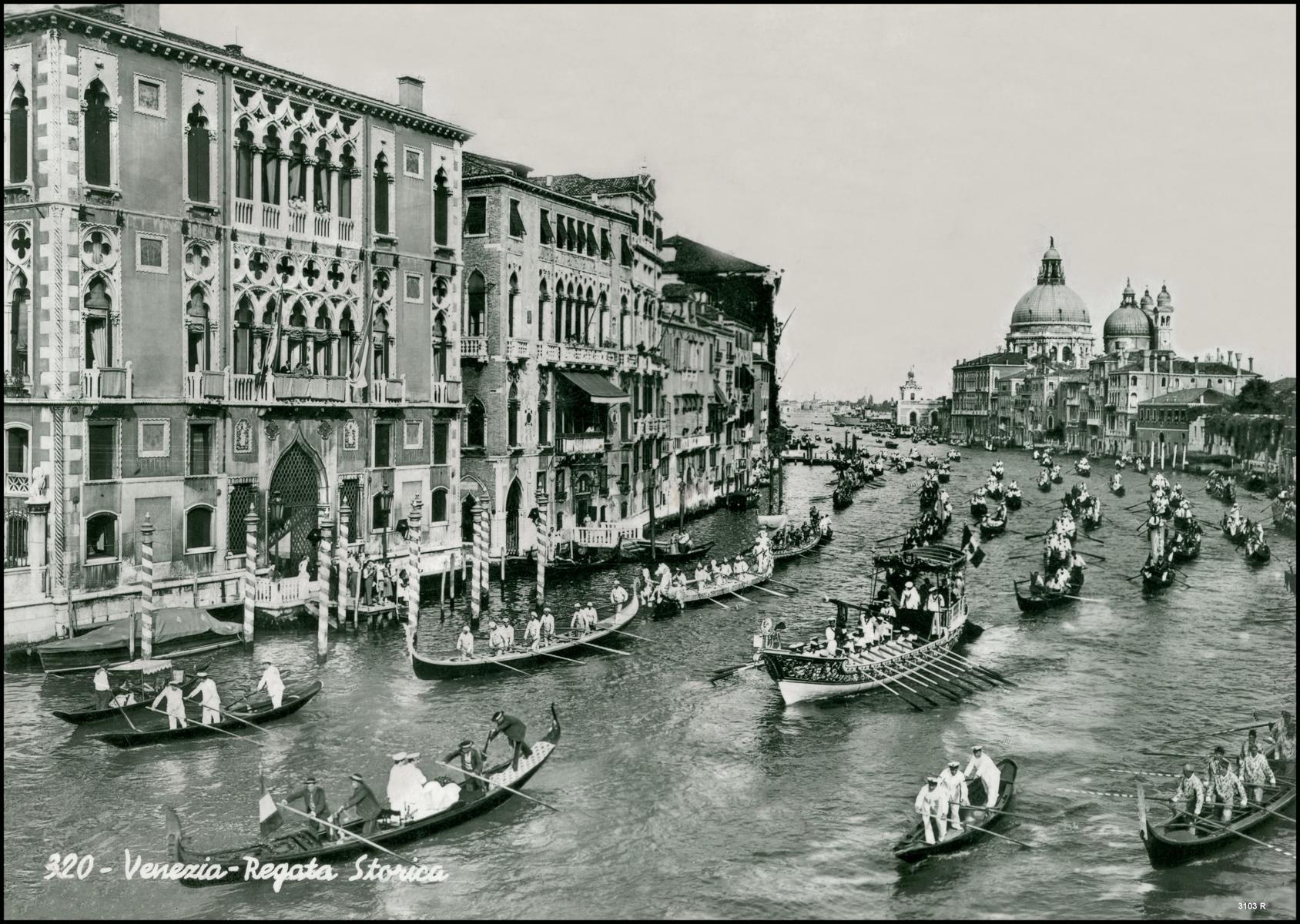
    Falls Du Anfang September nach Venedig fährst, gibt es ein aufregendes Ereignis, das Du nicht verpassen solltest. Die Regata Storica in Venedig, die historische Regatta, findet am ersten Sonntag im September statt und ist ein großartiges Spektakel, das Dich und Deine Begleiter begeistern wird.

    Die Regata Storica in Vendig ist nämlich ein Ereignis, das abertausende Touristen, Fans und Venezianer an die Ufer des Canal Grande lockt. Die Regatta zu sehen und die historische Prozession der Boote zu beobachten, ist eine ideale Gelegenheit, Venedig an einem der buntesten Tage des Jahres zu genießen.

    Hier erfährst Du, was Du für den Besuch dieses einzigartigen Ereignisses wissen musst.

    Was ist die Regata Storica in Venedig?

    Die Regata Storica in Venedig gilt als die wichtigste “Regata” der voga veneta. Lange Zeit, bevor Venedig Teil des restlichen Italiens wurde, diente sie vor allem dazu, die Gondoliere zu ermutigen, ihr Können zu erhalten. Sie wurde sogar viele Jahre lang privat finanziert. Nachdem Venedig jedoch Teil Italiens wurde, wurde die Regata Storica in Venedig zu einer Art, die Traditionen der venezianischen Republik zu feiern. Aufgrund dieser Bewahrung der lokalen Traditionen wird die Regata Storica in Venedig inzwischen wieder öffentlich finanziert.

    Gut zu wissen: Die voga veneta bezeichnet das venezianische Rudern und ist eine besondere Rudertechnik, die in der Lagune von Venedig und den angrenzenden Gebieten entwickelt wurde und bei der ein einzelner Ruderer mit einem oder zwei Rudern ausreicht, um das Boot voranzutreiben.

    Erst 1899, im Jahr der 3. Internationalen Kunstausstellung Biennale, wurde die Regata Storica in Venedig offiziell anerkannt. Es war Graf Filippo Grimani, der Bürgermeister von Venedig, der zu diesem Zeitpunkt den Namen “Regata Storica” prägte. Die ersten Regatten sind bereits für das 13. Jahrhundert belegt, aber manche glauben, dass die Tradition schon viel früher begann.

    Die verschiedenen Regata Storica in Vendig spielten auch eine wichtige Rolle in den Darstellungen von Künstlern über die Lagunenstadt, zum Beispiel in der Ansicht von Venedig von Jacopo dé Barbari um 1500.

    Mehr Informationen zu diesem berühmten Holzschnitt, das von einem deutschen Buchdrucker und Verleger aus Nürnberger, Anton Kolb, in Auftrag gegeben wurde, findest Du hier:

    Blick auf Venedig von Jacopo dé Barbari mit der Regata Storica in Venedig unten rechts im Bild.

    Warum rudern die Leute während der Regata Storica im Stehen?

    Natürlich ist die Regata Storica in Venedig in der Öffentlichkeit nicht so bekannt wie der Karneval, der in aller Welt für seine Masken und traditionellen Süßigkeiten berühmt ist, aber die Regata Storica in Venedig zieht dennoch jedes Jahr viele Touristen an, die mit Bewunderung eine so präzise und faszinierende Nachstellung einer alten venezianischen Tradizion beobachten können.

    Die Regatta ist die erste Veranstaltung im Kalender der Voga alla Veneta-Wettbewerbe, einer einzigartigen Disziplin, die seit Jahrhunderten nur in der Lagunenstadt ausgeübt wird.

    Die Ruderer rudern stehend auf Booten wie Pupparini, Gondeln und Gondolini, Sandoli: Der Meeresboden ist nicht so tief wie im offenen Meer, und wenn sie auf Booten mit sehr flachem Boden stehen, können sie die Tiefe des Wassers im Auge behalten.

    Die Geschichte der Regata Storica in Venedig

    An der Regatta haben schon immer venezianische Bürger und Außenstehende teilgenommen. Die frühesten historischen Aufzeichnungen stammen aus der Mitte des 13. Jahrhunderts und sind mit der Festa delle Marie verbunden. Es ist jedoch wahrscheinlich, dass es schon lange vorher eine Form von Bootsrennen gab, denn Venedig war schon immer eine Seefahrerstadt und die Ausbildung von Ruderern war eine wichtige Notwendigkeit.

    Viel später ist das erste visuelle Bild zu sehen: Eine Gruppe kleiner Boote mit der Aufschrift “Regatta” ist in Jacopo dé Barbaris Pianta di Venezia von 1500 zu sehen. Von da an war die Regatta eines der Lieblingsthemen der Vedutisten, der Maler und Zeichner mit der wirklichkeitsgetreuen Darstellung eines Stadtbildes als Schwerpunkt, um ein feierndes Venedig darzustellen.

    Die Etymologie des Wortes “regata” ist ungewiss, aber wahrscheinlich leitet es sich von dem Wort “aurigare” (lenken) ab, das im 16. Jahrhundert als Synonym für “gara” (Wettbewerb) verwendet wurde. Von Venedig aus gelangte der Begriff in die großen europäischen Sprachen und bezeichnete immer einen Wettbewerb auf Booten.

    Die Regata Storica in Venedig war schon immer bei Venezianern und Besuchern gleichermaßen sehr beliebt.

    Mit der Zeit verlagerte sich die Finanzierung der Regatten von der Republik auf Privatpersonen, bei denen es sich oft um ausländische Fürsten handelte. Als die Republik 1797 fiel, wurden die Regatten fortgesetzt und im selben Jahr rief die demokratische Regierung der Stadt zwei Rennen für ihre Bürger aus.

    Die moderne Regatta geht auf das Jahr 1841 zurück, als die Organisationskosten vom privaten in den öffentlichen Bereich zurückverlagert wurden. In jenem Jahr bat die Stadtverwaltung von Venedig die österreichischen Behörden, ein “jährliches Bootsrennen auf dem Canal Grande” auszurufen, das von den lokalen Behörden organisiert wurde, “um die Gondoliere zu ermutigen, die Ehre ihrer berühmten Fähigkeiten aufrechtzuerhalten”.

    Die Prozession, die den Herausforderungen der Regata Storica in Venedig vorausgeht, erinnert an die Begrüßung von Caterina Cornaro, der Braut des Königs von Zypern, die 1489 zugunsten von Venedig auf den Thron verzichtete. Es ist eine Parade von Dutzenden typischer Boote aus dem 16. Jahrhundert, bunt und mit kostümierten Gondolieri, die den Dogen, die Dogaressa, Caterina Cornaro und die höchsten Beamten der venezianischen Magistratur tragen, in einer originalgetreuen Rekonstruktion der glorreichen Vergangenheit einer der mächtigsten und einflussreichsten Seerepubliken im Mittelmeer.

    Als Venedig 1866 Teil des Königreichs Italien wurde, änderte sich der Schwerpunkt der Veranstaltung und statt irgendwelcher Rennen wurden die Regatten zu einer Feier der glorreichen Geschichte der Republik Venedig.

    Trotzdem wurde dies erst 1899, im Jahr der 3. Internationalen Kunstbiennale, offiziell von Graf Filippo Grimani, dem Bürgermeister von Venedig, anerkannt, der den Namen “Regata Storica” in Venedig prägte.

    Hostorischer Wasserumzug auf dem Wasser

    Der Wasserumzug erinnert an den Empfang von Caterina Cornaro, der Frau des Königs von Zypern, die 1489 zugunsten von Venedig auf ihren Thron verzichtete.

    Zahlreiche Boote im typischen Stil des 16. Jahrhunderts mit Gondolieri in historischen Kostümen tragen den Dogen, seine Frau und alle hochrangigen venezianischen Beamten in einer farbenprächtigen Parade den Canal Grande hinauf. Ein unvergesslicher Anblick und eine echte Rekonstruktion der glorreichen Vergangenheit einer der mächtigsten und einflussreichsten Seerepubliken im Mittelmeer.

    Die “Serenissima” ist eines der schönsten Parade-Schiffe Venedigs und führt die Parade während der Regata Storica in Vendig an. Sie repräsentiert die “Bucintoro”, das offizielle Staatsschiff des Dogen, dessen erstes Exemplar 1311 gebaut wurde. Das letzte und prächtigste Schiff wurde 1729 für den Dogen Alvise III Sebastiano Mocenigo gebaut. Das Schiff war 35 m lang, mehr als 8 m hoch und man brauchte 168 Ruderer und 40 Matrosen, um es zu fahren. Leider wurde das Schiff 1798 von Napoleon zerstört.

    Die Fondazione Bucintoro baut die Bucintoro von 1729 wieder auf, die dann bei Großveranstaltungen wie der Regata Storica eingesetzt werden soll. Bis sie in ein paar Jahren fertig ist, müssen wir uns damit begnügen, die Serenissima zu bewundern.

    Gut zu wissen: Der Name "Bucintoro" leitet sich wahrscheinlich von dem venezianischen Wort "burcio" ab, einer traditionellen Bezeichnung für ein Lagunenschiff, und "in oro", was so viel wie "mit Gold bedeckt" bedeutet.
    Die Geschichte der Regata Storica in Venedig

    Der Ablauf der Regata Storica in Venedig

    Die Regata Storica in Venedig besteht seit jeher aus verschiedenen Rennen mit unterschiedlichen Bootstypen. Ursprünglich waren das Galeeren, Torfkähne und Kähne sowie leichtere Boote, die von zwei oder mehr Ruderern gerudert wurden. Heutzutage gibt es zwar weniger Bootsarten, aber immer noch viele verschiedene Kategorien von Rennen (von nur Kindern bis nur Frauen).

    Das beliebteste Rennen für alle Zuschauer ist die Gondolini-Regatta. In früheren Jahren flankierten die adligen Männer die Rennen, um ungebärdige Zuschauer davon abzuhalten, die Aktiven zu stören. Heutzutage sind die großen Galeerenboote jedoch nur noch dekorativ.

    Am ersten Sonntag im September finden den ganzen Tag über Rennen statt. Sie beginnen mit der Parade historischer Boote mit kostümierten Mannschaften, Booten und Gondeln der venezianischen Rudervereine (Voga alla Veneta) entlang des Canal Grande. Dann folgen die Kinderrennen mit einer Kategorie für die unter 10-Jährigen! Danach folgen die Rennen der Erwachsenen, die eine noch größere Menschenmenge anziehen.

    Es ist ein seltenes Ereignis, bei dem man die beste Aussicht nicht unbedingt von einer schönen Terrasse oder einem exklusiven Hotel aus hat, sondern mitten in der Menge der drängelnden und aufgeregten Menschen. Alles endet am Fuße der Universität Ca’ Foscari, wo früher die Frau des Dogen zusammen mit einigen anderen wichtigen Adligen saß. Heutzutage werden hier die Preise verliehen und die Regata Storica in Venedig beendet.

    Es ist ein wirklich einzigartiges Erlebnis, bei dem Du den Stolz spüren kannst, der die Stadt zu Recht erfüllt. Wir bieten dir mit dem Apartment Serenissima den idealen Ort, um die Veranstaltungen zu überblicken. Direkt am Canal Grande gelegen, kannst du das ganze Treiben sehen und spüren. Ein wirklich besonderer Anlass.

    Disnar – Feierliches Bankett vor der Regata.

    Es war Tradition, alle Teilnehmer der Regatta und die zuständigen Behörden zu einem Bankett einzuladen, das am Donnerstag vor der Regatta stattfand. Ursprünglich nutzten die Gondoliere die Gelegenheit, um den Bürgermeister um Verzeihung für Verstöße zu bitten, die sie während des Jahres begangen hatten!

    Die Zeitung “L’Adriatico” vom 28. Juni 1912 gibt eine passende historische Beschreibung: “Jahrhunderts wurden in alten Zeiten entweder von der Signoria oder von Privatpersonen denjenigen, die an den Regatten teilnahmen, Mittagessen angeboten, die dann in die Tradition übergingen und unter dem Namen “Disnar der Ruderer” von der Gemeinde denjenigen angeboten wurden, die nach dem Rennen zu den Helden des Rudersports wurden”.

    Wie Du Deinen Platz bei einer geselligen Disnar-Runde sicherst, erfährst Du im Blogartikel Regata Storica in Venedig 2022.

    Teamvorstellung und Segnung beim “Salute”.

    Am Donnerstag vor der Regata Storica warten die Gondolieri in der Salute-Basilika auf ihre Segnung, die Präsentation der Mannschaften und die “Segnung der Gondolini” am Donnerstag davor. Zu dieser Veranstaltung kommen vor allem Einheimische, um ihre Freunde und Familienmitglieder anzufeuern, die sich für das Rennen qualifiziert haben. Das ist eine gute Gelegenheit, die Mannschaften und ihre jeweiligen Farben kennenzulernen, damit Du dein Lieblingsteam für Sonntag auswählen kannst.

    Die jungen Ruderer und die Frauen werden auf den Treppen der Kirche Santa Maria della Salute vorgestellt.
    Die männlichen Ruderer kommen mit ihren Gondolini und werden gesegnet, während sie in den Booten stehen.

    Die wichtigsten Veranstaltungen der Regata Storica in Venedig finden am Sonntag statt!

    Blick auf Santa Maria della Salute, Anlaufpunkt der Regata Storica in Venedig

    Die offizielle Regata Storica in Venedig am ersten Sonntag im September

    Am Tag der “Regata Storica” in Venedig sind das Markusbecken und der Canal Grande voll mit Booten jeder Form und Größe, gefüllt mit laut jubelnden, einheimischen Anhängern. Ursprünglich wurde der Regatta eine Flotte von “Bissone” (typische Paradeboote) vorausgeschickt, um die Strecke freizumachen und für Ordnung zu sorgen.

    In den Booten standen Adlige, die mit Bögen und Terrakotta-Kugeln (“balote”) bewaffnet waren und damit auf besonders widerspenstige Zuschauer schießen konnten. Heute stehen die Bissone immer noch an der Spitze der Prozession, aber sie haben nur noch eine zeremonielle Funktion und werden nicht benutzt.

    Die wichtigsten Punkte und Etappen der Regatta sind die folgenden:

    • der spagheto: ein Seil, das die Startlinie vor den Gärten von Sant’Elena markiert;
    • der paleto: ein in die Mitte des Canal Grande vor dem Bahnhof Santa Lucia getriebener Wendepfosten, an dem die Sieger traditionell die Führung übernehmen;
    • die machina: eine kunstvoll geschnitzte, farbenfrohe schwimmende Struktur, die vor dem Palazzo Ca’ Foscari festgemacht ist und sowohl die Ziellinie als auch die Bühne für die Übergabe der Geldpreise und Wimpel darstellt.

    Wimpel sind der Preis, von dem jeder venezianische Ruderer träumt: rot für den Sieger, weiß für den zweiten Platz, grün für den dritten. Die Farben für die ersten drei Ruderer entsprechen der italienischen Flagge.

    Vor der Gründung der Einigung des italienischen Staates war der zweite Platz hellblau. 

    Dann gibt es noch Blau für den vierten Platz – ursprünglich gelb und ein Schwein darstellend, ein Tier, das traditionell für seine langsame, träge Natur bekannt ist.

    Gut zu wissen: Die Flagge war schon immer das Symbol für den Sieg der Ruderer. Ursprünglich wurden die Fahnen, die mit einem Geldsack zusammengebunden waren, in einem Gestell am Rand der "machina" (Zielgerüst) aufgehängt und mussten von der "proviere" oder dem Heck abgerissen werden; dieser Brauch hielt sich bis zum Ende des 19. Jahrhunderts.

    Die Liste aller Gewinner seit 1841 findest du auf der Website der Regata Storica in Venedig (siehe unten).

    Die verschiedenen Rennen

    Die Regata Storica in Venedig besteht seit jeher aus verschiedenen Rennen mit unterschiedlichen Bootstypen. Ursprünglich waren das Galeeren, Torfkähne und Lastkähne sowie leichtere Boote, die von zwei oder mehr Ruderern gerudert wurden.

    Heute gibt es Rennen für Kinder, Frauen und Männer, aber das wichtigste und beliebteste Rennen ist die “Gondolini-Regatta der Männer”.

    Die jungen Ruderer benutzen “pupparini“, das sind schnelle, wendige Boote mit einem breiteren Heck. Die Frauen benutzen das leichtere und kürzere Boot, die “Mascareta“. Die Männer rudern in einer “caorlina” mit sechs Ruderbooten und bei der Hauptregata in einer “gondolino“. Diese wurde exklusiv für die Regata Storica in vendig entworfen und gebaut und ist leichter und schneller als eine Gondel.

    Die teilnehmenden Boote haben nicht nur eine Nummer, sondern sind seit 1843 auch in leuchtenden Farben bemalt. So sind sie schon von weitem zu erkennen und die ganze Veranstaltung wird dadurch noch festlicher. Sie werden jedes Jahr in einer anderen Farbe gestrichen, um dem Aberglauben vorzubeugen, eine bestimmte Farbe würde immer gewinnen. Seit der Regatta von 1892 sind die Farben unverändert geblieben: weiß, braun, rosa, hellblau, grün, lila, kanariengelb, rot und orange.

    Die Anzahl der Gondolini, die am Rennen teilnehmen, hat sich mehrmals geändert. Im Jahr 1841 waren es 8 Boote, 1843 waren es 7, von 1844 bis 1856 waren es 9, von 1857 bis 1874 waren es nur noch 7 und seit 1875 sind es wieder 9.

    In erster Linie ist die Regata Storica ein spannender venezianischer Ruderwettbewerb, eine einzigartige Disziplin. Insgesamt gibt es acht Wettbewerbe:

    • Regata de le schie für Kinder bis zum Alter von 10 Jahren
    • Regata de le maciarele für Kinder bis zu 12 Jahren
    • Regata de le maciarele für Kinder bis zum Alter von 14 Jahren
    • Regatta der Jüngsten auf Pupparini mit zwei Ruderern
    • Frauenregatta auf Mascarete mit zwei Ruderern
    • Regatta auf der Sechs-Ruder-Kaorlinie
    • Internationales Ruderwettbewerb der Universitäten
    • Regatta der Champions auf Gondolini mit zwei Ruderern

    Die am eifrigsten befolgte ist die letzte. Auch die Caorline-Regatta ist bei den Venezianern sehr beliebt, denn bei ihr treten neun Mannschaften aus ebenso vielen Gebieten der Lagune gegeneinander an. Die Gewinner werden als wahre Champions gefeiert und geehrt und genießen den Ruhm bis zur nächsten Ausgabe. Wenn Du an der Veranstaltung teilnimmst, wirst du merken, wie entschlossen und mit wie viel Elan jeder Venezianer sein Team anfeuert.

    Die Strecke ist je nach Regattakategorie unterschiedlich lang, aber die wichtigsten haben die Länge der historischen Parade. Wenn Du also auf einem Ponton lauerst, um die Prozession zu sehen, verlasse ihn erst, wenn die letzten Gondolini vorbeigezogen sind.

    Wenn Du mehr über die verschiedenen Schiffe erfahren möchtest, findest du auf der offiziellen Website der Regata Storica in Venedig (siehe unten) weitere Details zu jedem einzelnen Schiff. Wenn Dich ihre Ruderkünste faszinieren, kannst Du während deines Aufenthalts in Venedig auch Ruderkurse besuchen!

    Von wo aus kann ich die Regata Storica in Venedig am besten beobachten?

    Da es sich bei der Regata Storica in Venedig um ein großes Ereignis handelt, das sowohl von Einheimischen als auch von Touristen gefeiert wird, solltest Du damit rechnen, dass es am Canal Grande sehr voll sein wird. Viele Einheimische schauen sich das Ereignis von ihrem Boot aus an, also werden viele Boote entlang des Kanals vertäut sein. Das Einzige, worüber Du Dir Sorgen machen musst, ist, einen guten Platz zu finden, um das Ereignis zu beobachten.

    Bitte bedenke, dass das Vaporetto im Canal Grande und im Bacino di San Marco für den größten Teil des Nachmittags eingestellt wird. Das bedeutet, dass Du früh aufbrechen musst (vor 14.00 Uhr), wenn Du sie benutzen willst, oder dass Du zu Fuß gehen musst!

    Die Organisation der Regata Storica in Venedig stellt einen schwimmenden Stand auf dem Canal Grande in der Nähe des Campo San Vio auf. Du kannst deinen Platz auf ihrer Website buchen. Der Preis für ein Ticket beträgt 60 Euro (30 Euro für unter 18-Jährige und für Einwohner Venedigs).

    Wenn Du also zur Zeit der Regata Storica in Venedig bist, könntest Du einen Platz in einem Palazzo am Canal Grande suchen, aber vergiss nicht, dass man Venedig bei dieser Gelegenheit, wie bei so vielen anderen Gelegenheiten auch, am besten in einem Boot erlebt.

    Ein toller und kostenloser Platz zum Stehen ist die Punta della Dogana. Dort siehst Du zwar nicht den Zieleinlauf, wo es richtig voll ist, aber Du hast einen sehr guten Blick auf die historische Parade und die Rennen, die in die engere Einfahrt zum Canal Grande einfahren. Es gibt keine Bar in der Nähe, also solltest Du Dir ein paar Erfrischungen mitbringen.

    Die besten Unterkünfte am Canal Grande

    Folgende Unterkünfte bieten einen Blick auf den Canal Grande in der Nähe des Palazzo Ca’ Foscari, um die Regata Storica in Vendig in aller Ruhe zu genießen:

    Hotel Palazzo Stern

    Die 11 besten Hotels in Venedig - Hotel Palazzo Stern Venedig

    Das Gebäude wurde an der Stelle eines der ältesten venezianischen Paläste errichtet, in dem einst die berühmte Kunstsammlerfamilie Stern lebte. Es liegt direkt am Canal Grande im Sestiere von Dorsoduro und bietet einen spektakulären Blick auf die Regata Storica in Venedig

    Mehr Informationen auf

    Das Cover-Bild ist von Morton1905 via Wikimedia Commons unter Lizenz CC BY-NC-SA 2.0 verfügbar gemacht.
  • Jacopo de Barbaris Blick auf Venedig in einem Video des Correr Museums – Ein venezianisches Meisterwerk aus der Renaissance

    Jacopo de Barbaris Blick auf Venedig in einem Video des Correr Museums – Ein venezianisches Meisterwerk aus der Renaissance

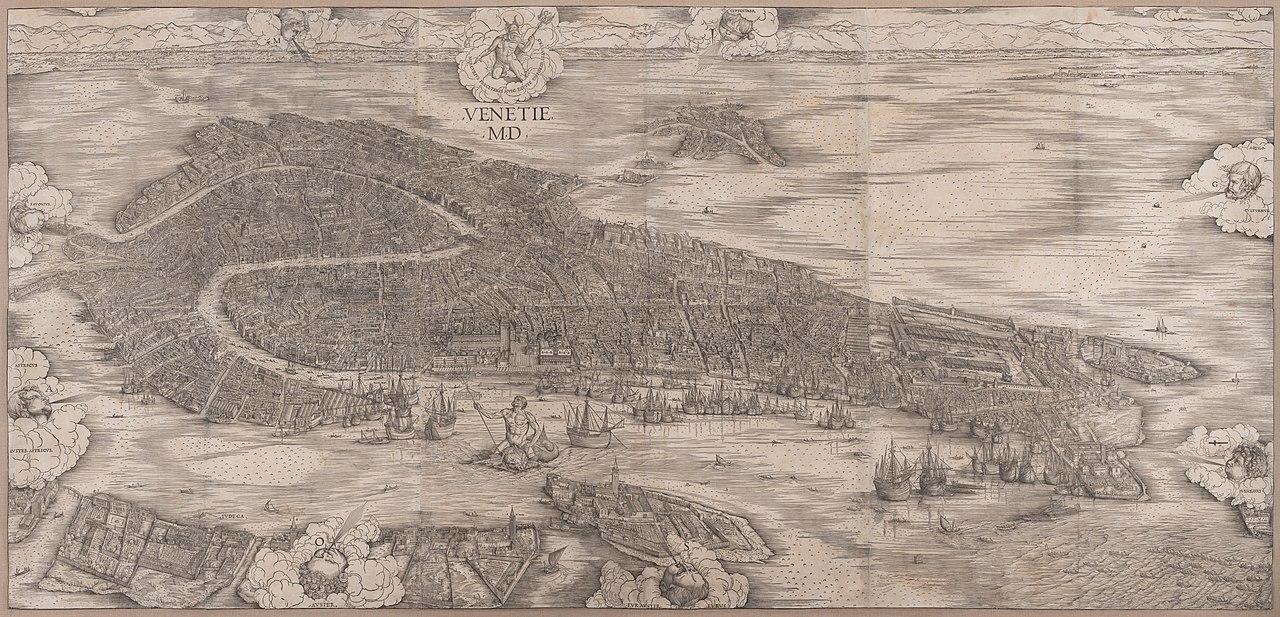
    Venetie MD (d.h. Venedig 1500), besser bekannt als “Veduta di Venezia” oder Jacopo de Barbaris Blick auf Venedig, ist eine große perspektivische Karte der Lagunenstadt, die von Jacopo de Barbari zwischen 1498 und 1500 als Vogelperspektive erstellt, in Holzschnitt gestochen und von Anton Kolb im Jahr 1500 veröffentlicht wurde.

    Die Besonderheit ist, dass es sich um eine perspektivische Rekonstruktion einer damals unmöglichen Aussicht auf die Umgebung handelte, da für die der Betrachter in einer Höhe von etwa 500 Metern hätte sein müssen.

    Das Holzschnitt

    Die Größe (134,5 x 282 cm) und vor allem die Präzision des Werks, das die architektonische Situation der Gebäude der Stadt genau wiedergibt, ermöglicht eine historische Rekonstruktion zu Beginn des 15. Jahrhunderts, einschließlich der Gebäude, die später entfernt und zerstört oder in späteren Epochen und bereits bei der in den 1630er Jahren begonnenen Renovatio verändert wurden.

    Jacopo de Barbaris Blick auf Venedig ist deswegen nicht nur eine Karte, sondern ein Meisterwerk. Es ist eine Ansicht der Stadt Venedig auf dem Höhepunkt ihrer Macht, eine Karte, die nicht nur Venedig und seine Calli, nicht nur die Paläste und Kirchen, sondern praktisch alles beschreibt, von den Werften bis zu den Gärten, von den Brücken bis zu den Fundamenten, bis hin zu den Schiffen, die im Markusbecken fahren.

    Für die Verwirklichung dieses Meisterwerks war eine für die damalige Zeit außergewöhnliche Vermessungskampagne unabdingbar, wenn man bedenkt, dass der Aussichtspunkt etwa 500 Meter über dem Meeresspiegel liegt und somit Jacopo de Barbari alle Maße dieser besonderen Perspektive hat anpassen müssen.

    Der Autor hat sich die Stadt also mental vorgestellt, da er physisch nicht in eine solche Höhe hätte gelangen können, und sich auf eine Perspektive von weniger als 100 Metern beschränkt, nämlich die des Glockenturms von St. Markus.

    Eine solche Leistung war nur möglich durch die Anwendung der Prinzipien der Trigonometrie und unter erfinderischer Verwendung der damals bekannten Instrumente: Astrolabium, topografischer Kompass, Limbus.

    Jacopo de Barbaris Blick auf Venedig- die Geschichte

    Am 30. Oktober 1500 erteilte die Signoria von Venedig Anton Kolb ein Privileg für diesen Druck für vier Jahre. In seiner Petition gab Kolb, ein Kaufmann aus Nürnberg und Freund Dürers, an, dass die Vorarbeiten drei Jahre gedauert hatten. Der Name des Künstlers wird in den Dokumenten nicht genannt, und der Druck ist auch nicht signiert, aber er stammt mit Sicherheit von Jacopo de Barbari; die Figur des Merkur oben trägt Jacopos persönliches Zeichen, den Caduceus.

    Am 30. Oktober 1500 beschlossen und bewilligten die unterzeichnenden Ratsherren dem oben genannten Bittsteller, dass es vier Jahre lang niemandem erlaubt sein soll, ein solches Werk herzustellen oder aus einem solchen Werk irgendeinen Ort zu entnehmen, der von der üblichen Abgabe befreit ist, und übergaben ihm ein Briefpatent in erweiterter Form.

    Die Ratsmitglieder Alvise Muazzo, Giovanni Morosini, Pietro Contarini, Antonio Tron

    Von der Zeit davor ist leider sehr wenig bekannt. Im Nachhinein kann man davon ausgehen, dass de Barbari bereits 1497 von dem in Venedig sehr aktiven Nürnberger Kaufmann Anton Kolb mit der ehrgeizigen Erstellung einer perspektivischen Karte der Stadt beauftragt worden war.

    De Barbari und Kolb standen schon damals in enger Beziehung zueinander und hielten diese auch danach noch lange aufrecht. 1504 wurden sie sogar am Hof von Kaiser Maximilian erwähnt, wo der Künstler ausgerechnet von dem Nürnberger Künstler vorgestellt wurde.

    Der Mangel an Informationen über den Autor war typisch für die damalige Zeit und führte dazu, dass das Werk dem größten Kupferstecher der Zeit, Albrecht Dürer, zugeschrieben wurde, der sich zweimal in Venedig aufhielt, allerdings nicht in der Zeit, in der das Werk ausgeführt wurde.

    Diese Zuschreibung ist seit dem Beginn des 17. Jahrhunderts belegt und setzte sich während des größten Teils des 19. Jahrhunderts fort.

    Erst gegen Ende des 19. Jahrhunderts führten Studien, die darauf abzielten, die Persönlichkeit des Meisters des Caduceus zu rekonstruieren, zu seiner einhelligen Identifizierung mit Jacopo de Barbari und damit zu seiner Zuschreibung. Der erste, der den Namen de Barbari vorschlug, war Ernst Harzen im Jahr 1855.

    Eine solche kartografische Meisterleistung wurde in Venedig nie wiederholt, und die zahlreichen anderen Ansichten zwischen dem 16. und dem frühen 18. Jahrhundert waren blasse Nachahmungen des Originals mit einigen Aktualisierungen und gegenseitigen Nachahmungen.

    Der Verbleib von Jacopo De Barbaris Blick auf Venedig

    Die Karte ist in sechs Holzblöcke eingraviert, weil die Oberfläche es unmöglich machte, eine einzige Matrize zu verwenden, und nicht nur, weil es keine so große Presse gab, sondern vor allem, weil ein Block dieser Größe leicht hätte zerbrechen können.

    Die Originalholzblöcke befinden sich im Correr-Museum in Venedig und können dort bewundert werden. Das Museo Correr befindet sich auf dem Markusplatz in Venedig und ist eines der elf städtischen Museen, die von der Fondazione Musei Civici di Venezia betrieben werden. Das Museum erstreckt sich auf der Südseite des Platzes in den oberen Stockwerken der Procuratorie Nuove.

    Um die Schiffe herum werden die Gewässer der Stadt besonders durch kräftig rudernde Boote belebt, und auch unten rechts wird eine Szene der Regata Storica präsentiert. Dies ist eine Darstellung in fast schon legendärer Funktion, um die kleineren Kanäle besser erkennen zu können.

    Mehr zu dieser venezianischen Tradition findest Du hier:

    Jacopo de Barbaris Blick auf Venedig mit Regata Storica in Venedig auf dem Canal Grande
    Jacopo De Barbaris Blick auf Venedig

    Mehr Informationen zum Bild: